“`html
Table of Contents
Delightful Strawberry Mango Sago Dessert Recipe
Introduction: Craving a Taste of Paradise?
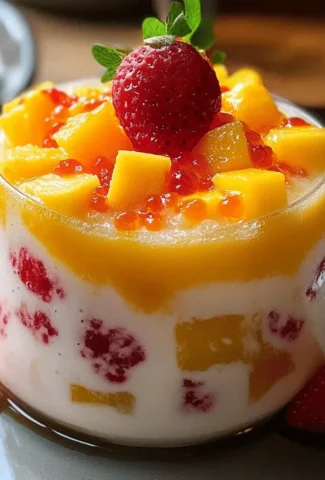
Did you know that 72% of people consider dessert an essential part of a meal, and tropical flavors are consistently ranked among the most popular? If you’re searching for a dessert that’s as visually stunning as it is delicious, then look no further than our Strawberry Mango Sago. This truly enchanting dessert is a vibrant celebration of two of summer’s most beloved fruits, perfectly balanced with the chewy delight of sago pearls. It’s a dessert that transports you straight to the tropics with every spoonful, offering a refreshing and tantalizing experience that is both sophisticated and incredibly easy to make. Get ready to impress your family and friends, or simply treat yourself to a moment of pure bliss.
Ingredients List: A Taste of Paradise
Gathering these beautiful ingredients is the first step towards your tropical escape. We’ve aimed for a balance of sweetness, creaminess, and tang to create a truly harmonious dessert. Subtlety in texture and intense, natural fruit flavors are key here.
- Small Sago Pearls (Sabudana): 1/2 cup. These tiny translucent spheres transform into delightful, jelly-like pearls when cooked, providing a wonderful chewy texture. Look for pearl tapioca suitable for desserts.
- Ripe Mangoes: 2 large, ripe, and sweet mangoes. The stars of our show! Opt for varieties known for their sweetness and fragrance, like Alphonso or Ataulfo. Their luscious, golden flesh will form the creamy base of our dessert.
- Fresh Strawberries: 1 cup, plus more for garnish. Their vibrant red hue and slightly tart, sweet flavor offer a beautiful contrast to the mango.
- Coconut Milk: 1 can (13.5 oz or 400ml), full-fat. For that unmistakable tropical creaminess and a subtle, nutty undertone. It binds the flavors together beautifully.
- Sweetened Condensed Milk: 1/2 cup (adjust to taste). This adds a rich, velvety sweetness and a smooth mouthfeel that complements the fruit perfectly.
- Evaporated Milk: 1/2 cup. This helps to create a lighter, more liquid base for the dessert, ensuring it’s not too thick while adding a subtle richness.
- Lime Juice: 1 tablespoon (freshly squeezed). A touch of acidity to brighten the flavors and cut through the richness, enhancing the fruit’s natural taste.
- Sugar: 1-2 tablespoons, or to taste. For sweetening the fruit purees if they aren’t sweet enough. Use white, granulated sugar for clarity of flavor.
- Water: For cooking sago.
Substitutions & Enhancements:
- For Sago Pearls: If small sago pearls are unavailable, you can use large tapioca pearls, but they will require soaking and longer cooking times. The texture will be slightly different, larger and chewier.
- For Mangoes: Frozen mango chunks (thawed) can be used in a pinch, though fresh will always yield the best flavor and texture.
- For Coconut Milk: Almond milk or regular milk can be used, but the distinct tropical essence will be lost. For a dairy-free alternative to condensed and evaporated milk, look for vegan sweetened condensed milk and consider using a thicker plant-based milk like cashew or oat, adjusting sweetness as needed.
- For Sweetener: Honey or maple syrup can be used, but they will impart their own flavors. Adjust the quantity to achieve your desired sweetness.
- Optional Add-ins: A few drops of rose water or cardamom powder can add an interesting aromatic dimension.
Timing: Sweet Perfection in No Time
This delightful dessert comes together surprisingly quickly, making it perfect for impromptu gatherings or a weeknight treat. It does require some chilling time to allow the flavors to meld and the dessert to set.
On average, most sago desserts require similar prep and cook times, with chilling being a standard step. Our recipe is efficient, especially if your fruits are easy to prepare.
Step-by-Step Instructions
Step 1: Cooking the Sago Pearls – The Foundation
Begin by rinsing the sago pearls under cold water to remove any excess starch. In a medium saucepan, bring 4 cups of water to a rolling boil. Add the rinsed sago pearls and stir immediately to prevent them from sticking together. Cook over medium heat, stirring frequently, for about 10-12 minutes, or until the pearls are almost entirely translucent, with just a tiny white dot in the center. Drain the cooked sago pearls into a fine-mesh sieve and rinse them under cold running water. This stops the cooking process and washes away any remaining starch, ensuring they remain separate and chewy. Set aside.
Step 2: Preparing the Fruit Purees – Vibrant Flavors
Peel and chop the ripe mangoes. Set aside about half of one mango, finely diced, for texture and garnish. Place the remaining mango flesh into a blender. Add the sweetened condensed milk, evaporated milk, and lime juice. Blend until you have a smooth, creamy puree. Taste and add a tablespoon or two of sugar if your mangoes aren’t sweet enough, blending again until incorporated. In a separate small bowl, mash or lightly puree the fresh strawberries. You can leave some small chunks for texture if you like. If your strawberries are not very sweet, you can lightly sweeten this puree with a teaspoon of sugar.
Step 3: Creating the Mango Sago Base – Creamy Dreaminess
In a large bowl, combine the mango puree with the full-fat coconut milk. Whisk gently until well combined. Now, fold in the cooked and rinsed sago pearls into the mango mixture. Stir carefully to distribute the pearls evenly throughout the creamy base. Reserve a small portion of the mango puree to swirl in later for visual appeal if desired.
Step 4: Layering the Dessert – A Symphony of Colors
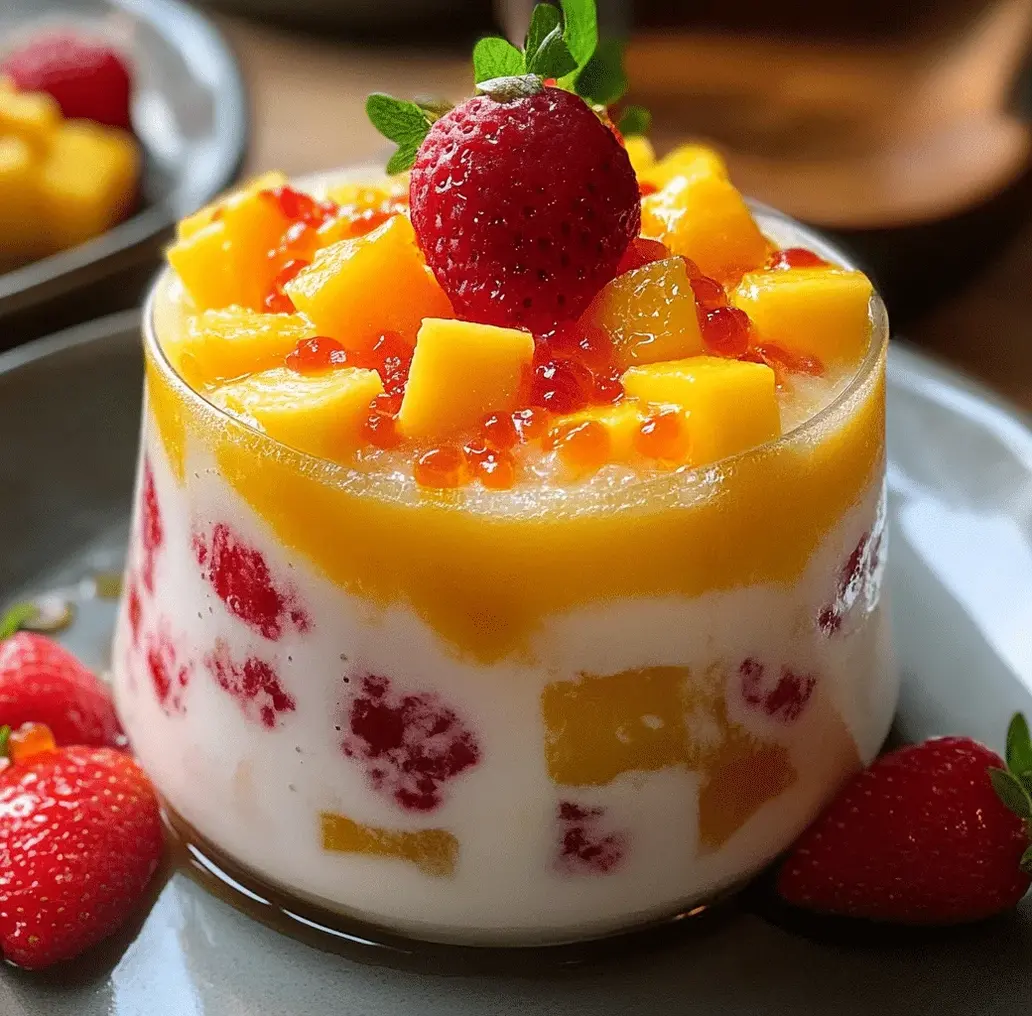
Choose your serving vessels. Clear glasses or small bowls work best to showcase the beautiful layers. You can either gently spoon the mango-sago mixture into the glasses, or if you prefer a more marbled effect, alternate spoonfuls of the mango-sago mixture with dollops of the strawberry puree. You can also lightly swirl the reserved mango puree into the mixture in the glasses using a skewer or toothpick for a beautiful marbled effect. Alternatively, you can layer the strawberry puree at the bottom of the glass, then add the mango sago mixture, or vice versa. Sprinkle some of the reserved diced mango pieces and fresh strawberry slices over the top of each serving.
Step 5: Chilling and Serving – The Tropical Escape
Cover the dessert glasses with plastic wrap, ensuring the wrap doesn’t touch the surface of the dessert (you can use small ramekins on top of the glasses to create this space). Refrigerate for at least 2 hours, or until thoroughly chilled. This allows the flavors to meld and the dessert to slightly thicken. Before serving, garnish with fresh strawberry slices, extra diced mango, or a sprig of mint for a touch of freshness.
Nutritional Information
While precise nutritional values can vary based on exact ingredient amounts and brands used, a typical serving of this Strawberry Mango Sago dessert offers a delightful balance. It’s a source of carbohydrates from the sago and fruits, healthy fats from the coconut milk, and vitamins and minerals from the fresh produce.
- Calories: Approx. 300-400 per serving (highly variable based on sugar and milk content).
- Carbohydrates: Primarily from sago and fruits.
- Fats: Rich in healthy fats from coconut milk.
- Vitamins & Minerals: Excellent source of Vitamin C from strawberries and mangoes, plus potassium and other nutrients.
Healthier Alternatives
We believe in indulgence that doesn’t compromise on health! Here are a few swaps to make this dessert even lighter without sacrificing that tropical flair:
- Reduce Sweeteners: Use less condensed milk and evaporated milk, or opt for unsweetened versions and rely more on the natural sweetness of ripe fruits. You can also experiment with natural sweeteners like stevia or erythritol, adjusting to taste.
- Lighter Milk Options: While full-fat coconut milk provides the best texture, you can use light coconut milk or even unsweetened almond milk for a lower-fat version. Be aware that this will alter the creaminess.
- More Fruit, Less Sago: Increase the fruit ratio and slightly reduce the sago pearls for a fruit-forward, less starchy dessert.
- Fresh is Best: Avoid canned fruits in syrup, which often contain added sugars.
Serving Suggestions
Elevate your Strawberry Mango Sago experience with these simple serving ideas:
- Garnish Perfection: Top with fresh mint leaves, toasted coconut flakes, slivered almonds, or a dollop of whipped cream (or coconut whipped cream for a dairy-free option).
- Individual Portions: Serve in elegant martini glasses or small, clear bowls to highlight the beautiful layers.
- Party Platter: Prepare in a large trifle dish for a stunning buffet centerpiece.
- Frozen Delight: For an extra chilled treat, briefly freeze the dessert in its serving cups for about 30-45 minutes before serving for a semi-frozen, sorbet-like consistency.
Common Mistakes to Avoid
Ensuring a perfect texture with sago can sometimes be tricky. Here are common pitfalls and how to avoid them:
- Clumpy Sago: Not rinsing the sago after cooking or not stirring it well during the initial boiling phase can lead to a clumpy, sticky mess. Always rinse with cold water and stir frequently.
- Overcooked Sago: Overcooked sago can become mushy and lose its characteristic chewiness. Cook just until translucent.
- Under-ripe Fruit: Using unripe mangoes will result in a tart, less flavorful dessert. Ensure your mangoes are ripe and fragrant.
- Not Enough Chilling: Rushing the chilling process means the flavors won’t meld properly, and the dessert won’t achieve its ideal consistency.
Storing Tips
Leftover Strawberry Mango Sago can be stored in an airtight container in the refrigerator for up to 2-3 days. The texture of the sago pearls may soften slightly over time. It’s best to store it unfrosted and garnish just before serving to maintain the freshness of the toppings.
FAQs
***Can I make this dessert ahead of time?***
Yes, absolutely! This dessert actually benefits from chilling time, allowing the flavors to meld together. You can prepare it up to 24 hours in advance, store it covered in the refrigerator, and garnish just before serving.
***What type of sago pearls should I use?***
Small sago pearls (also known as pearl tapioca) are ideal for this recipe as they cook relatively quickly and provide a delicate chew. Large sago pearls can be used, but they require soaking and a longer cooking time.
***My sago pearls are clumpy. What went wrong?***
This usually happens if the sago pearls aren’t stirred enough during cooking or if they aren’t rinsed immediately after draining. Ensure you stir them as they cook and rinse thoroughly under cold water once drained to remove excess starch.
***Can I use other fruits?***
Certainly! While strawberry and mango are a classic combination, feel free to experiment with other tropical fruits like passion fruit, pineapple, papaya, or lychee. Adjust sweetness based on the fruits you choose.
***Is this dessert dairy-free?***
The original recipe uses coconut milk, condensed milk, and evaporated milk, so it is not entirely dairy-free unless you use dairy-free alternatives for the condensed and evaporated milk. The coconut milk is dairy-free.
Ready to taste the tropics?
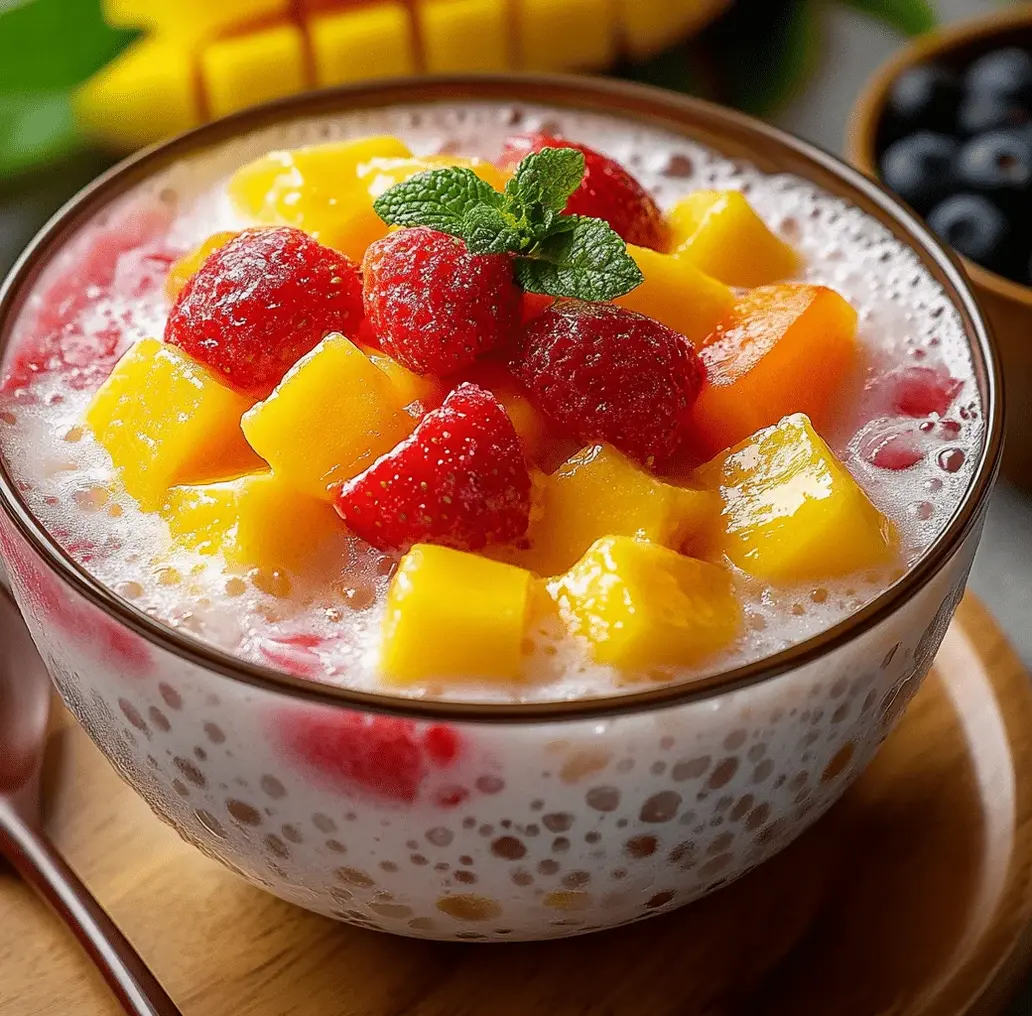
This Strawberry Mango Sago is more than just a dessert; it’s an experience. Slice into plump mangoes, admire ruby-red strawberries, and get ready for a burst of sunshine in every spoonful. Don’t forget to share your creations with us!
Delightful Strawberry Mango Sago Dessert Recipe

Indulge in the delightful result of our Strawberry Mango Sago – a truly captivating dessert that transports you straight to the tropics.
Ingredients
- 2 cupsmilk
- 2 tbspstrawberry custard powder or1/2 cupstrawberries blended into a puree +2 tbspcornstarch
- 2–3tbsp sugar
- 1 cupcoconut water
- 1 tspagar agar powder
- 1 tbspsugar
- 1/2 cupstrawberries, chopped
- 1mango, chopped
- 1 cupcoconut jelly, cut into cubes
- 1 cupstrawberry custard, cut into cubes
- 1/4 cupgond katira (edible tragacanth gum), soaked until jelly-like
- 1/2 cupcooked sago pearls
- 1/2 cupmilk, adjust to preference
- 1/4 cupcondensed milk, adjust to sweetness
- 1 cupice cubes
Instructions
- Start by bringing the coconut water to a gentle simmer in a medium saucepan over medium heat. Once warmed, sprinkle the agar-agar powder and one tablespoon of sugar into the mixture, continuously stirring until both the agar and sugar completely dissolve. Remove the saucepan from the heat and pour the mixture into a shallow container. Refrigerate for several hours or until set completely, before slicing it into small cubes for later use.
- In a separate bowl, combine the strawberry custard powder (or cornstarch alongside blended strawberries) with a quarter cup of milk, mixing well until it transforms into a smooth slurry. In a saucepan, heat the remaining milk along with the 2-3 tablespoons of sugar. After the milk reaches a hot temperature (but not boiling), gradually add the slurry while stirring continuously. Allow the mixture to thicken for a few minutes until it turns into creamy custard. Once thickened, transfer it into a container and let it cool. Refrigerate until set and then cut into delightful cubes.
- In a pot of boiling water, add the sago pearls and let them cook for 15-20 minutes. As they cook, you will notice them becoming translucent, which indicates they are ready. Strain the cooked sago and rinse them under cold water to stop the cooking process and remove excess starch.
- Prior to mixing everything, it’s crucial to prepare gond katira. Soak it in water for several hours or overnight until it transforms into a jelly-like texture. After soaking, drain off any excess water to serve it in the dessert.
- In a large mixing bowl, gather the chopped strawberries, mango chunks, coconut jelly, soaked gond katira, and the cooked sago pearls. Gently fold in the strawberry custard cubes to integrate the flavors and textures. Pour in the remaining milk and condensed milk, adjusting the sweetness and thickness according to your preference. Once combined, add some ice cubes to the mixture. Serve this tropical delight in chilled glasses or bowls and enjoy every mouthful of summer!
Notes
Ensure that you soak gond katira well ahead of time to enhance its texture and make it jelly-like. If you prefer a more pronounced coconut flavor, consider adding coconut milk instead of regular milk. For an animal-free version, swap out the condensed milk with coconut cream and ensure the custard powder is vegan-friendly.
Nutrition
- Calories: Approximately 250 per serving
- Protein: 4 g
“`
Leave a Reply