Table of Contents
Flavors of Home, Remembered: The Sampler Platter That Tells a Story
I still remember the first time I tasted a perfect flan. It was in a tiny patisserie in Paris, during my first year at culinary school. My instructor, a no-nonsense Parisian chef, slid a small ramekin across the counter and simply said, “Goûtez.” One spoonful of that silky, caramel-kissed custard and I was transported. But here’s the thing—my flan recipe isn’t just a French one. It’s the one I’ve built over years, blending the gentle sweetness I remember from Moroccan tea-time treats with the precise French technique I learned in that Parisian kitchen. This classic flan recipe is all about that perfect balance: a dense yet creamy custard that’s sturdy enough to hold its shape, swimming in a pool of made-from-scratch caramel sauce. It’s the kind of dessert that feels fancy but is honestly simple to pull together. I’ve taught this in my NYC cooking classes for years, and the look of pure joy when someone unmolds their first perfect flan never gets old.
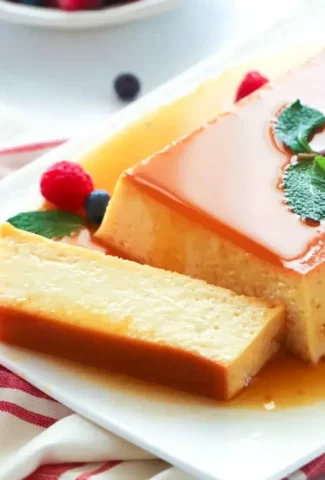
Imagine this: a cold, creamy slice of custard, just firm enough to hold a clean edge, bathed in a rich, golden-brown caramel that tastes like toasted sugar and a whisper of butter. The texture is magical—not quite panna cotta, not quite crème brûlée, but something in between. It’s dense but melts on your tongue, leaving behind a lingering sweetness that’s never cloying. The caramel sauce is the star here, made from just sugar and water, coaxed to a deep amber color that adds a slight bitterness to balance the sweet custard. My secret? A tiny splash of bourbon in the custard base. It doesn’t scream “alcohol”—instead, it rounds out the flavor, adding a warmth and depth that makes you wonder why you ever made flan without it. It’s a little trick I picked up from a chef friend in New Orleans, and it transforms this dessert from good to unforgettable.
This isn’t just any flan—it’s the version I’ve perfected after dozens of test batches in my tiny NYC apartment kitchen. The key technique? Cooking the caramel to exactly the right stage (not too dark, not too pale) and then covering the loaf pan tightly with foil during baking. That foil creates a steamy environment that prevents a skin from forming on the custard, giving you that perfectly smooth, glossy surface. The most common mistake I see is over-baking—you want the center to still jiggle just a little when you pull it out of the oven. The residual heat will carry it to the perfect set. And here’s my favorite pro tip: after you pour the hot caramel into the pan, let it sit for exactly 10 minutes before pouring in the custard. That short wait allows the caramel to firm up just enough that it won’t mix with the custard during baking, ensuring you get that beautiful, distinct layer. Trust me on this one.
Why This Flan Recipe Is the Best
What makes this flan stand out is the flavor secret: the bourbon. I know, it sounds unexpected for a classic Latin-flavored or French custard. But just one tablespoon of bourbon does something magical—it lifts the vanilla and caramel flavors, creating a warmth that feels like a hug. I stumbled on this combination after a trip to New Orleans, where I tasted a flan at a Creole café that had this subtle, complex undernote. The chef smiled and whispered “a little bourbon, chère.” I’ve been using it ever since. It doesn’t make the flan taste like whiskey; it just makes it taste… more. More rich, more round, more memorable.
The texture is where I go full French-chef nerd. The perfect flan is dense but not heavy, creamy but not watery. The secret is the ratio of whole eggs to extra yolks. Three whole eggs plus four extra yolks gives you a custard that’s rich and velvety, with enough structure to unmold cleanly. My Parisian training taught me to never over-whisk the eggs—just a gentle stir until combined, then strain through a sieve to catch any bits of egg white that could create a bumpy texture. It’s a small step that makes a huge difference. Plus, baking at a low 300°F in a water bath ensures the custard cooks gently and evenly, without curdling.
And the best part? It’s foolproof and fast—well, as fast as a custard can be. The active prep time is only about 20 minutes. The rest is hands-off baking and chilling. Even if you’ve never made a caramel from scratch, this recipe walks you through it with visual cues. “It should look like honey,” I always tell my students. The caramel might firm up in the pan—no worries, it will loosen as it bakes. This is a great make-ahead dessert too. I often whip it up on a Sunday, and it sits happily in the fridge until I need a showstopper for a weeknight dinner party. It’s forgiving, flexible, and always impresses.
American Flan Ingredients
I buy all my flan ingredients from the Union Square Greenmarket or my local Key Food in Brooklyn. The eggs I get from a farm upstate—they have the most vibrant yolks, which gives the flan a beautiful golden color. The milks are all easily found at any supermarket. And the bourbon? I use Bulleit, but any good-quality bourbon you enjoy drinking will work. It doesn’t have to be expensive—just something with a smooth, not-too-smoky profile. I remember my mother in Morocco making a similar dessert called ‘mahallabia’ with rose water and orange blossom water—completely different, but the same spirit of a simple, elegant custard dessert. This flan is my American adaptation, with ingredients that are easy to find anywhere in the US.
Ingredients List
- ¼ cup or 2 fl oz water
- ¾ cup or 150 g sugar (for the caramel)
- 3 large eggs, plus 4 egg yolks
- 1 can or 14 oz sweetened condensed milk
- 1 can or 12 oz evaporated milk
- ½ cup or 4 fl oz whole milk (half-and-half or 2% milk may be substituted but do not use skim milk)
- 1 tbsp bourbon (optional, but highly recommended)
- 1 tbsp vanilla extract
- ½ tsp or 3 g salt
Ingredient Spotlight
Let’s talk about the stars of this show. The sweetened condensed milk is non-negotiable—it’s what gives the flan its signature dense, creamy sweetness. Don’t even think about substituting it with regular milk and sugar; the texture will be all wrong. The evaporated milk adds a subtle nuttiness and helps create that smooth, pourable consistency. It’s not the same as regular milk—it’s been heated to remove some water, concentrating its flavor and proteins, which is exactly what we want. And the whole eggs plus extra yolks: the whole eggs provide structure, while the yolks add richness and that silky, almost pudding-like texture. Use the freshest eggs you can find—the yolks should be round and stand tall. If you’re in a pinch, you can use all whole eggs (7 large), but the texture will be slightly less luxurious.
| Original Ingredient | Best Substitution | Flavor / Texture Impact |
|---|---|---|
| Sweetened condensed milk | Coconut cream + 2 tbsp sugar (vegan option) | Slightly less sweet, lighter texture, coconut undertone |
| Evaporated milk | Half-and-half | Slightly thinner custard, less rich, still works |
| Whole milk | 2% milk (not skim) | Slightly less creamy, but acceptable |
| Bourbon | Dark rum or 1 tbsp vanilla extract | Rum adds a similar warmth; extra vanilla is milder |
| 3 large eggs + 4 yolks | 7 large whole eggs | Denser, slightly less silky texture, still good |
How to Make Flan — Step-by-Step
Making flan from scratch might seem intimidating, but I promise it’s just a few simple steps. The key is to go slow, trust your eyes (and nose) for the caramel, and don’t rush the baking. Let’s break it down together.
Step 1: Make the Caramel
In a small, heavy saucepan, combine the ¼ cup water and ¾ cup sugar. Stir continuously over medium heat until the sugar is completely dissolved—it should look like clear syrup. Bring it to a boil, then reduce the heat to low. Stop stirring immediately. Let it cook undisturbed until the mixture starts to brown around the edges. Then, pick up the pan and gently swirl it every 30 seconds or so—just swirl, don’t stir. You’re looking for a deep golden-brown color, the shade of honey or light amber. This takes about 6-8 minutes total.
💡 Samantha’s Pro Tip: Watch the caramel like a hawk. It goes from perfect to burnt in seconds. As soon as it turns a honey color, pull it off the heat. The residual heat will continue to darken it as you swirl for another 15-20 seconds. If it smells burnt, you’ve gone too far—start over. It’s cheap to remake, and nothing beats a well-made caramel.
Step 2: Prepare the Custard
In a large bowl, whisk the 3 whole eggs and 4 egg yolks together until just combined—don’t over-whisk, as you don’t want too many air bubbles. Pour in the sweetened condensed milk, evaporated milk, whole milk, bourbon, vanilla extract, and salt. Whisk gently but thoroughly until everything is well incorporated. Now, pour this mixture through a fine-mesh sieve into a separate large bowl. This catches any little bits of egg white or milk solids and guarantees a silky-smooth custard.
⚠️ Common Mistake to Avoid: Don’t skip the straining step! I know it’s an extra bowl to wash, but it’s the difference between a velvet-smooth flan and one with tiny, unpleasant bits of cooked egg white. Trust me, your future self will thank you.
Step 3: Bake the Flan
After the caramel has set for about 10 minutes (it may have firmed up—that’s fine), pour the sieved custard mixture over the caramel into the loaf pan. Cover the loaf pan tightly with aluminum foil—this is crucial. Now, place the loaf pan in the center of a larger baking or roasting pan (a 9×13-inch works perfectly). Carefully pour boiling water into the larger pan until it reaches about 1 inch up the sides of the loaf pan. Bake at 300°F (not 350°F—we’re going low and slow) for 60-70 minutes. The center should still jiggle very slightly when you gently shake the pan. It will continue to cook from its own heat.
💡 Samantha’s Pro Tip: The jiggle test is your best friend. When you gently shake the pan, the center should wobble like a soft gelatin—not sloshy liquid, but a gentle tremor. If it’s completely still and firm, it’s over-baked. Let it sit in the water bath out of the oven for about an hour to finish cooking gently.
Step 4: Chill and Unmold
Remove the loaf pan from the water bath and let it cool completely at room temperature. Once cooled, wrap the pan tightly in plastic wrap (this prevents the flan from absorbing any fridge smells). Refrigerate for at least 2 hours, though overnight is best for the texture to fully set. When you’re ready to serve, slide a sharp knife around the edges of the pan to loosen the flan. Place a rimmed platter (important—there’s lots of sauce!) on top, then invert the whole thing. Let it sit for a minute or two—if it doesn’t release, give it a gentle shake. The caramel sauce will pool around the flan. Scrape any remaining caramel from the pan with a spatula and pour it over the top. Slice and serve.
⚠️ Common Mistake to Avoid: Don’t be tempted to rush the unmolding. If the flan isn’t fully chilled (at least 2 hours, ideally overnight), it will fall apart. Also, use a rimmed platter—that caramel sauce is abundant and will run everywhere if you use a flat plate.
| Step | Action | Duration | Key Visual Cue |
|---|---|---|---|
| 1 | Make caramel | 8-10 minutes | Color of honey, bubbling amber |
| 2 | Mix custard | 5 minutes | Smooth, well-combined mixture |
| 3 | Bake in water bath | 60-70 minutes | Center jiggles like soft gelatin |
| 4 | Cool and chill | 2+ hours (overnight best) | Firm, not jiggly, cold to the touch |
| 5 | Unmold and serve | 2-3 minutes | Clean slide from pan, caramel pools around |
Serving & Presentation
Serving flan is all about letting its beauty shine. When I’m plating this for a dinner party in my NYC apartment, I like to slice it into neat, 1-inch thick pieces and lay each slice in a shallow puddle of that glorious caramel sauce. A small pinch of flaky sea salt (like Maldon) over the top is my secret weapon—it cuts through the sweetness and adds a professional finish. Sometimes I’ll add a few fresh berries on the side for a pop of color and acidity. In the winter, I’ll dust the plate with a little cinnamon or cardamom for warmth. In the summer, I might serve it with a scoop of vanilla bean ice cream. It’s simple, elegant, and always crowd-pleasing.
For a Moroccan twist that reminds me of my childhood, I’ll sometimes drizzle a bit of orange flower water over the platter before inverting the flan—it adds a delicate floral aroma that’s unexpected and lovely. Or, if you’re channeling Parisian elegance, serve it with a dollop of lightly sweetened crème fraîche and a side of fresh figs or sliced poached pears. The creamy custard pairs beautifully with something a little tart or slightly acidic. For a special brunch, I’ve even made mini flans in individual ramekins—they’re adorable and perfect for portion control.
| Pairing Type | Suggestions |
Reader Interactions |
|---|
Leave a Reply