Table of Contents
French Antilles Coconut Flan (Flan Coco) – Creamy, Tropical, and Here to Stay
I’ll never forget the first time I tasted a truly authentic French Antilles Coconut Flan, called Flan Coco. It was on a trip to Martinique years ago, and the moment that creamy, coconut-infused custard melted on my tongue, I knew I had to learn how to make it myself. Back in my home kitchen in New York City, I spent weeks experimenting to capture that perfect balance — the silky custard from my Paris culinary school training, the tropical richness of the Caribbean, and a hint of caramelized sweetness that reminded me of my mother’s baking in Morocco. This French Antilles Coconut Flan is the result, and I’m so excited to share it with you.
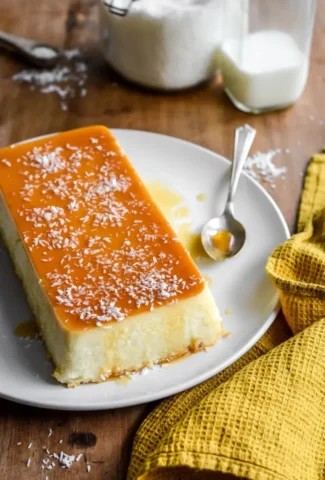
Imagine a dessert that’s both elegant and humble — a slice of flan that’s impossibly smooth, with a delicate coconut aroma that dances in every bite. The caramel on the bottom melts into a pool of amber sweetness as you flip it, while the shredded coconut adds a subtle chew. It’s the kind of treat that cools you down on a hot summer afternoon or warms your soul on a chilly winter evening. The texture is a dream: firm enough to hold its shape, yet so tender it practically dissolves on your tongue.
What makes my version special? I’ve combined traditional French flan technique with a Caribbean coconut twist, using unsweetened shredded coconut for texture and coconut milk for depth. No shortcuts, no boxed mixes — just real ingredients and a few pro tricks I learned in Paris. I’ll walk you through the caramel-making process so you never end up with burnt sugar, and I’ll share a simple trick to get that perfect silky custard every single time. Trust me, even if you’ve never made flan before, you can absolutely nail this one.
Why This French Antilles Coconut Flan Recipe Is the Best
The Flavor Secret: This isn’t your average flan. I use both sweetened condensed milk and unsweetened shredded coconut, which creates layers of sweetness and texture. The coconut milk adds a rich, nutty creaminess that transports you straight to a beachside café in the French Antilles. My Parisian pastry training taught me the importance of balance — the caramel is deep and slightly bitter, which offsets the custard’s sweetness perfectly. It’s a dance of flavors that keeps you coming back for one more bite.
Perfected Texture: The trick to a flawless flan is the water bath. I gradually heat the custard in a bain-marie, which ensures even cooking and prevents curdling. My French training taught me to look for just the right jiggle — the center should be slightly soft, but firm around the edges. And the addition of shredded coconut? That’s my Moroccan heritage speaking — we love texture in our desserts, and those little coconut bits add a lovely chew without overwhelming the velvety custard.
Foolproof & Fast: I’ve simplified the technique so anyone can make it. From the no-stir caramel method to the easy flip trick using warm water, I’ve eliminated the fuss. This French Antilles Coconut Flan is perfect for beginners because it’s forgiving — even if your caramel over-browns a touch, it still tastes incredible. I’ve tested it in my tiny NYC apartment oven and it works flawlessly every time.
French Antilles Coconut Flan Ingredients
When I shop for ingredients for this French Antilles Coconut Flan, I head to the Union Square Greenmarket in NYC for the best coconut milk and fresh eggs. There’s something about seeing those golden eggs laid by happy hens that reminds me of my mother’s garden in Morocco. I even tracked down a local Caribbean grocer for authentic unsweetened shredded coconut — the kind that comes from freshly grated coconut rather than the sweetened flake stuff. Let me walk you through each ingredient so you know exactly what to look for.
Ingredients List
- 1 1/2 cups + 1 tbsp (400ml/14oz) sweetened condensed milk
- 1 1/4 cups (300ml /10.15 fl oz) coconut milk (from a can)
- 3 large eggs
- 1 tsp vanilla extract (or seeds of ½ vanilla bean)
- 1 cup (95g) unsweetened shredded coconut (plus extra for garnish)
- For the caramel: ½ cup (100g) sugar
Ingredient Spotlight
Sweetened Condensed Milk: This is the backbone of the custard’s sweetness and creaminess. Look for cans that are not dented, and give them a gentle shake — you should hear nothing, meaning it’s perfectly thick. If you’re dairy-free, you can substitute with canned sweetened condensed coconut milk, but note that the texture will be slightly less firm. I tested this myself — the coconut version gives a lighter, more tropical flavor.
Coconut Milk: Use full-fat canned coconut milk for the richest result. Avoid “lite” versions — they’ll make your flan watery. I reach for brands like Aroy-D or Chaokoh from Asian markets. The fat content is key to that silky mouthfeel. If you can’t find good-quality canned coconut milk, you can use boxed coconut milk from the refrigerated section, but it will be thinner and your flan will set less firmly.
Unsweetened Shredded Coconut: This is my secret ingredient. It adds texture without extra sugar, letting the custard’s natural sweetness shine. I buy mine from the bulk bin at Whole Foods — make sure it says “unsweetened” on the package. If you only have sweetened coconut, reduce the condensed milk by 2 tablespoons. Toasting it lightly beforehand adds a deeper, nuttier flavor — just watch it closely because it burns quickly.
| Original Ingredient | Best Substitution | Flavor / Texture Impact |
|---|---|---|
| Sweetened Condensed Milk | Sweetened Condensed Coconut Milk (dairy-free) | Lighter texture, more coconut flavor, slightly less firm set |
| Coconut Milk (canned) | Full-fat coconut cream from a can | Richer, creamier, more decadent texture |
| Unsweetened Shredded Coconut | Sweetened shredded coconut (reduce condensed milk by 2 tbsp) | Sweeter overall, slightly less texture contrast |
How to Make French Antilles Coconut Flan — Step-by-Step
I promise this is simpler than it sounds. Just follow these steps carefully — especially the caramel part — and you’ll be rewarded with a spectacular dessert that wows everyone. Let’s get started!
Step 1: Make the Caramel
Place the ½ cup sugar in a small saucepan over medium-high heat. Do not stir — just let it melt. You can gently shake the pan to distribute the heat evenly. Watch carefully as the sugar turns from white to clear, then amber. When it becomes a deep golden color, immediately remove it from the heat and pour it evenly into the bottom of your loaf pan. Swirl the pan to coat the bottom completely. Be careful — caramel is extremely hot. Let it cool and harden for about 5 minutes.
💡 Samantha’s Pro Tip: Use a light-colored stainless steel pan for caramel-making — it’s easier to see the color change. If you’re nervous, add a tablespoon of corn syrup to the sugar; it helps prevent crystallization and gives a smoother caramel.
Step 2: Mix the Custard
In a large mixing bowl, whisk together the condensed milk, coconut milk, eggs, vanilla extract, and shredded coconut. Whisk until well combined — about 30 seconds. Don’t over-mix or you’ll incorporate too much air, which can create bubbles on the surface of the flan. Pour the mixture gently over the hardened caramel in the loaf pan. Tap the pan lightly on the counter to release any large air bubbles.
⚠️ Common Mistake to Avoid: Over-whisking the eggs can cause a foam to form. That foam creates an ugly spongy layer on top of the flan. Just whisk until the ingredients are combined — no need to go crazy!
Step 3: Bake in a Water Bath
Place the loaf pan inside a larger baking dish. Carefully fill the larger dish with very hot tap water until it reaches about 1/4 up the sides of the loaf pan. This water bath ensures gentle, even heating — it’s a classic French technique called bain-marie. Bake at 350°F (180°C) for 50-55 minutes. The flan is done when the top is lightly golden and firm to the touch, but the center still jiggles slightly when you shake the pan.
💡 Samantha’s Pro Tip: To prevent water from splashing into the custard, place the loaf pan in the larger dish first, then pour the water in using a measuring pitcher. Also, place the whole setup on the oven rack before pouring — much safer!
Step 4: Chill and Unmold
Remove the flan from the oven and let it cool to room temperature on a cooling rack — about 1 hour. Then transfer it to the refrigerator and chill for at least 3 hours, preferably overnight. The chilling step is essential for the flan to set properly. When ready to serve, place the loaf pan in about 2 inches of warm water for 30-60 seconds to soften the caramel. Run a knife around the edges, place a plate upside down over the pan, hold tightly, and quickly invert it. The flan should slide out with a cascade of caramel sauce.
⚠️ Common Mistake to Avoid: Skipping the warm-water bath before unmolding! If the caramel is too hard, the flan will stick and crack. Don’t leave it in the water too long, though, or the edges will melt.
Sprinkle with extra shredded coconut before serving for a beautiful finish. Now, let’s look at a quick reference table for all the steps.
| Step | Action | Duration | Key Visual Cue |
|---|---|---|---|
| 1 | Make Caramel | 5-7 min | Deep amber color, no burnt smell |
| 2 | Mix Custard | 2 min | Smooth, no lumps, minimal foam |
| 3 | Bake in Water Bath | 50-55 min | Golden top, firm edges, soft center |
| 4 | Chill & Unmold | At least 3 hours | Caramel liquefies when warmed, flan slides out easily |
Serving & Presentation
This French Antilles Coconut Flan is stunning on its own, but a little presentation goes a long way. I like to serve it on a simple white cake stand so the deep caramel pools around the slice — it’s like edible art. Sprinkle a generous pinch of toasted shredded coconut on top, and add a few edible flowers like pansies or mint leaves for a pop of color. It’s the kind of dessert that steals the show at any dinner party.
In my New York City apartment, I often serve this flan on warm summer evenings with a side of fresh mango slices and a dollop of whipped cream. It also pairs beautifully with a cup of dark-roast coffee — the bitterness balances the sweetness. For a Moroccan twist, I sometimes dust it with a tiny pinch of cinnamon or cardamom; that warm spice is a nod to my mother’s kitchen. In Paris, we’d serve it with a simple fruit coulis, like passion fruit or raspberry, to cut through the richness.
💡 Samantha’s Pro Tip: If you’re serving this at a brunch, make individual flans in ramekins — just reduce the baking time to 30-35 minutes. They unmold beautifully and look so elegant!
| Pairing Type | Suggestions | Why It Works |
|---|---|---|
| Side Dish | Fresh tropical fruit (mango, pineapple, papaya) | Bright acidity cuts the creamy sweetness |
| Sauce / Dip | Passion fruit coulis, salted caramel, or dark chocolate sauce | Adds a tangy or bold flavor contrast |
| Beverage | Espresso, dark roast coffee, or coconut rum cocktail | Coffee bitterness balances sweetness; rum echoes coconut |
| Garnish | Toasted coconut flakes, edible flowers, cinnamon dust | Adds texture, color, and aroma |
Make-Ahead, Storage & Reheating
This French Antilles Coconut Flan is my go-to make-ahead dessert when I’m hosting a dinner party in my busy NYC life. I can prepare it a full two days in advance, which leaves me free to focus on the main course and cocktails. The flan actually improves as it sits — the flavors meld and the texture gets even silkier. I usually make it on a Thursday night for a Saturday gathering.
| Method | Container | Duration | Reheating Tip |
|---|---|---|---|
| Refrigerator | Covered loaf pan or airtight container | Up to 5 days | Serve cold; no reheating needed |
| Freezer | Wrap in plastic, then foil |
Reader Interactions |
Leave a Reply