Table of Contents
Hibachi Steak Bowls with Sirloin Marination – Better Than The Steakhouse!
Growing up in Morocco, the concept of “hibachi” was foreign, but the celebration of fire-seared meat and vibrant vegetables was very much a part of my soul. After training in Paris and settling into the fast-paced energy of NYC, I found myself craving the high-heat, high-flavor excitement of a Japanese steakhouse. These Hibachi Steak Bowls bring that theatrical dining experience right into your kitchen. By focusing on a specific sirloin marination technique, we elevate simple top sirloin into something that tastes like it came off a $10,000 flat-top grill, even if you’re just using a standard skillet in a tiny Manhattan apartment.
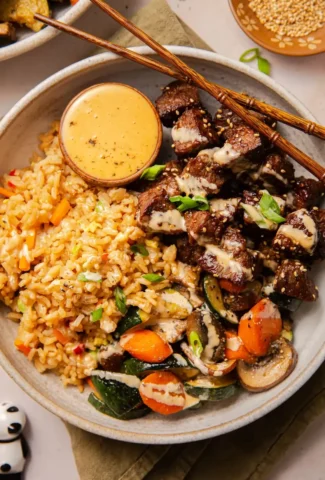
The sensory experience of these bowls is unparalleled. Imagine the sizzle of garlic and ginger hitting hot butter, the sweet aroma of mirin rising through the steam, and the vibrant colors of zucchini and carrots glistening in a light teriyaki glaze. Each tender chunk of steak delivers a savory punch, balanced by the creamy, tangy drizzle of Yum Yum sauce. The texture is key here—crunchy, tender-crisp vegetables paired with succulent, seared-to-perfection beef. It’s a symphony of Umami that feels sophisticated yet profoundly comforting, mimicking the exact profile of your favorite Benihana meal without the long wait times.
What sets my version apart is the depth of the marinade. While many recipes skip straight to the pan, I insist on a 30-minute mirin and ginger soak. This step, inspired by the French emphasis on marination and the Moroccan love for spice pastes, ensures the meat is flavorful from the inside out. In this guide, I’ll share how to avoid the common mistake of overcrowding the pan, which leads to steamed rather than seared meat. I’ve perfected this for the home cook who wants chef-quality results. Trust me, once you master my specific searing technique, you’ll never settle for takeout hibachi again!
Why This Hibachi Steak Bowls Recipe Is the Best
The secret lies in the mirin infusion. By using mirin—a Japanese rice wine—we’re not just adding sweetness; we’re using its low alcohol content to gently break down muscle fibers in the sirloin. This professional touch, combined with my NYC-style high-heat sear, creates a “crust” that locks in juices, a technique I refined during my years working in French bistros where the Maillard reaction is king.
We achieve the perfect texture balance by cooking the components separately. Most home cooks toss everything in at once, resulting in mushy zucchini. My method treats each ingredient with respect, ensuring the mushrooms are golden and earthy while the steak remains medium-rare. It’s about managing moisture—a trick I learned in professional kitchens to ensure every bite has its own distinct character.
Finally, this recipe is designed for the modern schedule. It uses accessible ingredients found at any US grocery store like Trader Joe’s or Whole Foods, yet the flavor profile is authentic. It is foolproof because we use butter and sesame oil together—the sesame oil provides high-smoke point stability and flavor, while the butter offers that luxurious, nutty richness that defines steakhouse hibachi.
Hibachi Steak Bowls Ingredients
When I head down to the Union Square Greenmarket here in NYC, I’m always looking for the freshest zucchini and carrots. For the steak, a trip to a local butcher is great, but a good quality supermarket top sirloin works beautifully if treated with care.
Ingredients List
- 2 lbs top sirloin steak, cut into 1-inch chunks
- 1 tablespoon mirin (essential for sweetness and tenderizing)
- 6 cloves of garlic, finely minced
- 2 teaspoons ginger paste
- 2 tablespoons plus 1 teaspoon sesame oil, divided
- ½ teaspoon ground white pepper (black pepper works too!)
- 4 tablespoons unsalted butter, divided
- 3 medium carrots, thinly sliced on a bias
- 2 medium zucchinis, sliced into half moons
- 5 ounces baby bella mushrooms, sliced
- 1-2 tablespoons teriyaki sauce (Bachan’s is my favorite)
- Serving: Pre-made fried rice & Yum Yum sauce
- Optional: Toasted sesame seeds and green onions for garnish
Ingredient Spotlight
Top Sirloin: This is the workhorse of the steak world. It’s lean but flavorful. Look for “Prime” or “Choice” grades at the store for better marbling. If it’s too expensive, you can substitute with flank steak, but be sure to cut across the grain to ensure it remains tender after the high-heat sear.
Mirin: This Japanese rice wine is the “secret sauce.” It adds a mild acidity and sweetness that balances the saltiness of the soy/teriyaki. If you can’t find it, a dry sherry or even a splash of rice vinegar with a pinch of sugar can work as a substitute.
Sesame Oil: Use toasted sesame oil for the best depth. It has a lower smoke point than vegetable oil, which is why we mix it with butter. This combo creates the signature “steakhouse” aroma that fills the house as soon as it hits the pan.
| Original Ingredient | Best Substitution | Flavor / Texture Impact |
|---|---|---|
| Top Sirloin | Filet Mignon | Increased tenderness; much higher cost. |
| Mirin | Dry Sherry + Sugar | Slightly more “boozy” but maintains the sweetness. |
| Baby Bella | Shiitake Mushrooms | Will add a woodier, more intense umami flavor. |
| Zucchini | Broccoli Florets | Adds more crunch; requires 2 mins extra cook time. |
How to Make Hibachi Steak Bowls — Step-by-Step
Don’t be intimidated by the multiple components—this flows very quickly once you have your “mise en place” (everything in its place) ready!
Step 1: The Flavor Infusion
Place your sirloin chunks in a bowl with mirin, garlic, ginger, 1 tsp sesame oil, pepper, and salt. Toss thoroughly. Let it sit for at least 30 minutes at room temperature. This is the French “mariné” technique that ensures the garlic oils penetrate the beef fibers.
💡 Samantha’s Pro Tip: If you have the time, let the steak marinate for 2 hours in the fridge. The flavors will be twice as deep!
Step 2: Sauté the Garden
In a large wok, melt 2 tablespoons of butter and 1 tablespoon of sesame oil. Add carrots, zucchini, and mushrooms. Sauté for 10-15 minutes until the zucchini has those beautiful brown edges. Season with garlic powder and salt at the very end.
⚠️ Common Mistake to Avoid: Don’t salt the vegetables immediately! Salt draws out moisture. If you salt too early, your veggies will boil in their own juice instead of browning.
Step 3: High-Heat Steak Sear
Remove veggies and wipe the pan. Add the remaining butter and oil. When the pan is screaming hot, add the steak in a single layer. Sear for 3-4 minutes, tossing only occasionally. Drizzle with teriyaki sauce at the final 30 seconds to glaze.
💡 Samantha’s Pro Tip: Work in batches if your pan is small. If you crowd the steak, the temperature drops and you lose that “hibachi” crust.
Step 4: Bowl Assembly
Divide your fried rice into bowls. Top with a generous portion of meat and veggies. Drizzle with Yum Yum sauce and serve immediately while the butter is still piping hot.
| Step | Action | Duration | Key Visual Cue |
|---|---|---|---|
| 1 | Marinate | 30-60 mins | Meat looks glossy and wet. |
| 2 | Sauté Veggies | 12 mins | Zucchini edges are golden brown. |
| 3 | Sear Steak | 4 mins | A dark brown crust forms on the beef. |
| 4 | Glaze | 30 secs | Sauce bubbles and coats the meat. |
Serving & Presentation
In Manhattan, the bowl culture is huge—we love a meal that fits in one hand! To plate these like a pro, I like to keep the components distinct rather than mixing them. Place the rice on one side, the veggies in a neat pile, and the glistening steak opposite. This creates a visually stunning “rainbow” effect that highlights the freshness of the ingredients.
For garnishing, take a leaf out of my Moroccan heritage: we love textures. Toasted sesame seeds provide a tiny crunch, while scallions cut on a sharp bias add a pop of bright green and a mild bite. If you want to go the extra mile, serve with a side of quickly pickled cucumbers (sunomono) to provide a refreshing acidic contrast to the rich, buttery steak.
| Pairing Type | Suggestions | Why It Works |
|---|---|---|
| Side Dish | Miso Soup or Salad | Lightness to balance the butter. |
| Sauce / Dip | Ginger Dressing | Adds a zesty, classic steakhouse vibe. |
| Beverage | Iced Green Tea | Cuts through the richness of the steak. |
| Garnish | Pickled Ginger | Acidic palate cleanser between bites. |
Make-Ahead, Storage & Reheating
As an NYC chef, I know that meal prep is a survival skill. This recipe is fantastic for the “Sunday Reset.” I often double the vegetable portion because they hold up so well. The steak should be slightly undercooked if you plan on reheating it, so “Rare” becomes “Medium” after a minute in the microwave.
| Method | Container | Duration | Reheating Tip |
|---|---|---|---|
| Refrigerator | Airtight Glass | 4 Days | Microwave with a damp paper towel. |
| Freezer | Freezer Bag | 2 Months | Thaw overnight; stir-fry to revive. |
| Make-Ahead | Sectioned Tupperware | 3 Days | Keep sauce separate until serving. |
When reheating steak, the microwave is often the enemy of texture. To keep the meat tender, use the 50% power setting on your microwave. This slower heating process prevents the proteins from tightening up and becoming rubbery.
Variations & Easy Swaps
| Variation | Key Change | Best For | Difficulty Impact |
|---|---|---|---|
| Spicy Harissa Hibachi | Add 1 tsp Harissa | Moroccan-Japanese Fusion | None |
| GF-Friendly | Tamari & GF Teriyaki | Gluten sensitivities | None |
| Low-Carb Wrap | Cauliflower Rice | Keto-friendly diets | Slightly easier |
Samantha’s Harissa Hibachi Twist
I love to blend my worlds. By adding just a teaspoon of Moroccan Harissa paste to the steak marinade, you get a slow-building heat that pairs incredibly well with the sweetness of the mirin. It’s an NYC fusion specialty that guests always ask about!
Gluten-Free Hibachi Bowls
This is a very easy swap. Use Coconut Aminos or Gluten-Free Tamari in place of the teriyaki sauce. Be sure to check the Yum Yum sauce label, though most commercial brands are naturally gluten-free. The flavor remains 100% authentic.
Winter Root Veggie Hibachi
When zucchini isn’t in season at the NYC markets, I swap it for parsnips and daikon radish. Searing these root vegetables in the butter/sesame mix provides a much heartier, earthier version of the bowl that feels perfect for a cold January night.
What is the best cut of steak for hibachi bowls?
While Japanese steakhouses often use expensive wagyu, for a home cook, top sirloin is the absolute gold standard. It provides the perfect balance of beefy flavor and lean texture that doesn’t get too greasy when sautéed with butter and sesame oil. If you want something even more tender, you can use New York Strip or Filet Mignon, but sirloin is the most authentic budget-friendly choice.
How do you keep the steak from getting tough?
The key to tender hibachi steak is two-fold: the mirin marinade and the heat. Mirin contains enzymes that help break down the connective tissue of the beef. Secondly, you MUST use a very hot pan and cook the meat quickly. Overcooking is the enemy here; aim for a high-heat sear for just 3-4 minutes so the center stays juicy while the outside gets that steakhouse crust.
Can I make hibachi steak bowls without a wok?
Absolutely! While a wok is great for heat distribution, a heavy-bottomed cast iron skillet or a large stainless steel frying pan works just as well. The most important thing is having enough surface area so the steak isn’t piled on top of itself. If the meat is crowded, it will steam in its own juices instead of getting that beautiful brown sear we want.
What is in Yum Yum sauce?
Most store-bought Yum Yum sauces are a base of mayonnaise, tomato paste, sugar, paprika, and garlic powder. It’s a creamy, slightly sweet, and tangy sauce that is a staple in American hibachi restaurants. If you are watching your sugar intake, look for specific “low sugar” varieties, as the traditional version can be quite sweet, though that sweetness is what balances the salty steak!
Is this recipe good for meal prep?
Yes, it’s one of my favorite NYC meal-prep recipes! The veggies and rice hold their texture very well for up to four days in the fridge. To keep the steak from drying out when you reheat it, I recommend storing the Yum Yum sauce on the side and adding it after you’ve warmed up the bowl. A quick splash of water before microwaving also helps steam the rice back to life.
Share Your Version!
I would love to see how your Hibachi Steak Bowls turned out! Did you stick to the classic zucchini and carrots, or did you try my Harissa twist? Please leave a star rating and a comment below—it helps other home cooks find these recipes and join our little kitchen community.
Tag me in your photos on Instagram @mykitchenstorie! I love seeing how you plate your bowls. Which part of the hibachi experience is your favorite—the ginger-marinated steak or that addictive Yum Yum sauce?
From my NYC kitchen to yours — I hope this recipe brings as much warmth to your table as it does to mine. — Samantha 🧡
Love This Recipe? Save It to Pinterest!
If you enjoyed this Hibachi Steak Bowls recipe, don’t let it get lost in your browser tabs! 😄 Pin it now so you can find it again anytime — and explore hundreds more tried-and-tested recipes waiting for you on my Pinterest boards.
👉 Follow Samantha on Pinterest @exorecipe
📌 Pin this recipe · 🔁 Re-pin your favorites · 💬 Tag me when you make it — I love seeing your creations!
Hibachi Steak Bowls
These Hibachi Steak Bowls are loaded with tender, flavorful pieces of sirloin, sautéed vegetables, and fried rice. If you love Benihana and Kobé Japanese steakhouses, you’ll enjoy these bowls inspired by those restaurants! This recipe is wildly easy and perfect for a delicious weeknight-friendly dinner or meal prepping!
Ingredients
- 2 lbs top sirloin steak, cut into rough chunks
- 1 tablespoon mirin
- 6 cloves of garlic, finely minced or pressed
- 2 teaspoons ginger paste
- 2 tablespoons plus 1 teaspoon sesame oil, divided
- ½ teaspoon ground white pepper (or black pepper)
- Kosher salt, to taste
- 4 tablespoons unsalted butter, divided
- 3 medium carrots, thinly cut on a bias
- 2 medium zucchinis, sliced in half lengthwise & then cut into half moons
- 4–5 ounces sliced mushrooms (I use baby bella)
- ½ teaspoon garlic powder
- 1–2 tablespoons teriyaki sauce or Japanese BBQ Sauce (we love Bachans!)
- For serving: Fried rice & store-bought Yum Yum Sauce
Instructions
- . Place the sirloin into a large bowl (or inside a large plastic baggie). Add the mirin, garlic, ginger, 1 teaspoon sesame oil, white pepper (or black pepper), and salt-to taste. Toss all ingredients to fully combine, ensuring steak chunks are thoroughly coated. Then set the steak aside to marinate for at least 30 minutes.
- . In a wok or large skillet, heat 2 tablespoons of butter and 1 tablespoon of sesame oil over medium heat. When hot, add the carrots, zucchini, and mushrooms. Cook the veggies, tossing often, until tender and golden brown, about 10-15 minutes. Season the veggies with garlic powder and salt/pepper- to taste. Then transfer the sautéed veggies to a clean plate and set aside. If needed, carefully wipe the pan clean with a damp paper towel.
- . In the same pan, add remaining 2 tablespoons butter and 1 tablespoon sesame oil over medium-high heat. When hot, add the steak. Cook, tossing beef often, until nicely seared, about 3-4 minutes- careful not to overcook steak into toughness. Then remove from heat, and drizzle in the teriyaki sauce or Japanese BBQ sauce, toss well to coat steak in sauce until chunks are glistening.
- . Evenly divide the cooked steak and sautéed veggies into shallow bowls, along with fried rice. Finish off bowls with a drizzle of store-bought Yum Yum sauce (or feel free to serve it on the side) to complete these hibachi steak bowls. Enjoy!
Leave a Reply