Table of Contents
Red Wine Braised Short Ribs in Dutch Oven Moroccan‑Inspired Slow‑Cooked Intense Depth
I still remember my first visit to an elegant Parisian bistro, a warm snowfall inside, and a waiter whispering about the best short ribs in town. That memory inspired the signature slow‑cooked, Moroccan‑infused take on classic braised short ribs that I now bring to my New York kitchen. This recipe marries French technique with a splash of North African spice, making the meat fall apart in a luscious red‑wine gravy that’s perfect for a cozy family dinner.
Imagine each rib steamed to tender perfection, coated in a glossy, deep‑red sauce thickened by tomato paste and a hint of thyme. The aroma of caramelized onions, crushed garlic, and pepper‑spiced stock fills the kitchen, while the visual contrast of dark meat against a bright, caramelized crust invites home‑cooked comfort. The sauce is silky, slightly acidic from the Cabernet, and carries a whisper of earthiness that balances the richness of the beef.
What sets this version apart is the deliberate use of a Dutch oven to lock in moisture and flavor, and the inclusion of a splash of orange zest—a subtle nod to my grandmother’s Moroccan kitchen—giving the dish a bright, aromatic finish. A pro tip I’ll share at the last step: allow the ribs to rest uncovered on a cooling rack for 10 minutes before serving, so the crust stays crisp. A common mistake I’ve seen is over‑skipping the browning stage; that step is crucial for depth of flavor.
Why This Red Wine Braised Short Ribs Recipe Is the Best
The flavor secret lies in the slow pressure of a Dutch oven, which melds the Cabernet’s tannins with the beef’s umami to create a sauce so robust it could headline a Michelin‑star dinner. My training in French cuisine taught me the importance of first browning the meat, a technique I perfected in Manhattan’s bustling markets.
Perfected texture comes from a precise sear, a strong reduction of wine, then gentle, slow simmering. This method ensures the connective tissue turns to gelatin, giving each bite “fall‑apart” tenderness that will have guests asking for seconds.
Foolproof & Fast: The step‑by‑step guide below keeps even a busy NYC parent from confusion. It takes less than a kitchen‑lat setup, and the long oven time means you can prep it before dinner and let it cook while you enjoy other tasks.
Red Wine Braised Short Ribs Ingredients
I head to the farmers market on a Saturday morning for the freshest beef, and then I stop by the specialty aisle at Whole Foods for a bottle of Cabernet Sauvignon that adds depth to the sauce. The olive oil I use is extra‑virgin from California, and the aromatic herbs I pick from the local garden bring a fresh, green note reminiscent of my mom’s spices.
Ingredients List
- 2 tablespoons olive oil
- 3–4 pounds bone‑in short ribs (8–10 pieces)
- Salt (pepper to taste)
- 1 large onion, diced
- 2 stalks celery, diced
- 2 carrots, diced
- 3 cloves garlic, smashed
- 2 tablespoons tomato paste
- 2 cups Cabernet Sauvignon red wine
- 3 cups beef broth
- 2 bay leaves
- 1 sprig fresh thyme
- 1 sprig fresh oregano
Ingredient Spotlight
Short Ribs – Look for well‑marbled cuts for richness; brands like “A1” offer bone‑in blocks that stay juicy. A quick test: press the meat – if it squeezes back lightly, it’s prime. Substitute with chuck roast for a budget option; texture will be slightly firmer but still tender if cooked slowly.
Cabernet Sauvignon – A robust red feeds the sauce with tannins and sweetness. If unavailable, try a medium‑bodied Merlot. This swap yields a slightly fruitier, softer sauce but keeps depth intact.
Tomato Paste – Adds body and a subtle sweetness. If you’re low on pantry staples, use canned crushed tomatoes in place; just reduce the amount to avoid extra liquid.
| Original Ingredient | Best Substitution | Flavor / Texture Impact |
|---|---|---|
| Short Ribs | Chuck Roast | Firmer texture, less marbling. |
| Cabernet Sauvignon | Merlot | Softer fruitiness. |
| Tomato Paste | Crushed Tomatoes | More liquid, less concentration. |
How to Make Red Wine Braised Short Ribs — Step-by-Step
Let the aroma of simmering beef set in before you even start. I always take my time searing; this is where the magic begins.
Step 1: Brown the Meat
Heat 2 Tbsp olive oil in a 6 Qt Dutch oven over medium‑high heat. Brown the short ribs, 5‑6 minutes per side, in two batches. Transfer to a plate and set aside.
💡 Samantha’s Pro Tip: Let the meat sear without moving it; this builds the Maillard flavor that’s essential for depth.
Step 2: Cook Onions and Vegetables
Add diced onion; cook 8‑10 minutes until translucent. Stir in celery and carrots, cook 3‑5 more minutes.
⚠️ Common Mistake to Avoid: Skipping the sauté step; the vegetables brown to release flavor early.
Step 3: Garlic and Tomato Paste
Add 3 cloves smashed garlic and 2 Tbsp tomato paste; cook 2 minutes until fragrant.
💡 Samantha’s Pro Tip: Toasting the tomato paste for a minute brightens the sauce.
Step 4: Add Red Wine
Pour 2 cups Cabernet Sauvignon, bring to a boil, then reduce to medium; simmer until reduced by half (15‑20 minutes).
⚠️ Common Mistake to Avoid: Dumping the wine in too quick; it can scorch. Lower heat gradually.
Step 5: Add Beef Broth
Stir in 3 cups beef broth; return ribs to pot, add bay leaves, thyme, and oregano.
💡 Samantha’s Pro Tip: Use fresh herbs rather than dried; they release aromatic oils more gently.
Step 6: Cover and Bake
Seal with lid; transfer to preheated oven at 350 °F. Bake 2 ½–3 hrs until ribs are tender.
⚠️ Common Mistake to Avoid: Using a non‑lidded pot; the meat can steam instead of braising.
Step 7: Serve and Recover Sauce
Transfer ribs to plate, cover with foil. Strain the sauce, discard vegetables, return liquid to pot. Simmer until thick.
💡 Samantha’s Pro Tip: Simmer for 10 minutes after straining; the sauce should coat the back of a spoon.
| Step | Action | Duration | Key Visual Cue |
|---|---|---|---|
| 1 | Brown ribs | 5‑6 min each side | Deep brown crust |
| 2 | Sauté onion, celery, carrot | 8‑10 min | Translucent onion |
| 3 | Cook garlic & tomato paste | 2 min | Fruity aroma |
| 4 | Add wine & reduce | 15‑20 min | Deepening color |
| 5 | Add broth, herbs, return ribs | 3 min | Herb aroma |
| 6 | Bake in oven | 2 ½–3 hrs | Tender flesh |
| 7 | Strain sauce & simmer | 10 min | Velvety coat |
Serving & Presentation
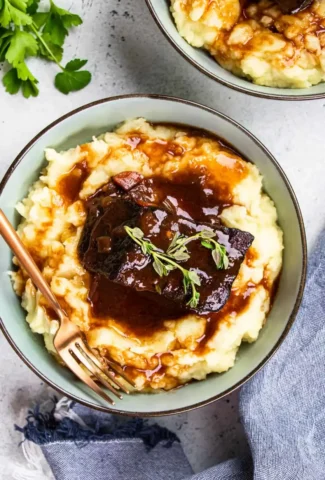
Plate the short ribs on a rustic wooden board, drizzle with the glossy sauce, and scatter fresh sprigs of thyme for a fragrant touch. Add a side of buttery mashed potatoes—my favorite—and a crisp green salad tossed in a lemon vinaigrette for a bright counterbalance.
For a pop of color, garnish with orange peel zest, a nod to the Moroccan influence that added a citrus lift. Pair with a glass of the still-aged Cabernet you used; its deep notes elevate the beef’s savoriness.
I love serving this comfort dish in my NYC apartment during fall; the aroma draws everyone in, and the tender meat makes people forget the hustle outside.
| Pairing Type | Suggestions | Why It Works |
|---|---|---|
| Side Dish | Risotto, mashed potatoes, roasted root vegetables | Creamy or starchy sides mellow the sauce. |
| Sauce / Dip | Gravy reduction, butter sauce | Adds richness. |
| Beverage | Cabernet Sauvignon, full‑bodied red, or a dry sherry | Matches the sauce’s depth. |
| Garnish | Fresh herbs, toasted nuts, citrus zest | Adds aroma and color. |
Make-Ahead, Storage & Reheating
When I’m juggling flights and a wedding, I prepare these ribs a day in advance. The sauce deepens overnight, giving it a more complex flavor profile.
| Method | Container | Duration | Reheating Tip |
|---|---|---|---|
| Refrigerator | Air‑tight glass jar | 2 days | Reheat gently on low, adding a splash broth. |
| Freezer | Vacuum sealed bag | 3 months | Thaw overnight, simmer until thick. |
| Make‑Ahead | Separately cook ribs and sauce | 5 days in advance | Reheat sauce, then fold in fresh ribs. |
I always check the internal temperature; if it reaches 130 °F for a perfect medium‑rare or 140 °F for well‑done, it’s ready. I also add a splash of heavy cream near the end for extra silkiness, but I can skip it for a lighter option.
Variations & Easy Swaps
| Variation | Key Change | Best For | Difficulty Impact |
|---|---|---|---|
| Vegetarian Portobello Stew | Replace ribs with thick portobello caps | Vegan dinner | Easy |
| Gluten‑Free Version | Use tamari instead of soy, cornstarch for thickening | Anywhere | Moderate |
| Seasonal Spice Twist | Add smoked paprika instead of oregano | For fall | Easy |
Vegetarian Portobello Stew
Let the caps marinate in a mixture of balsamic, garlic, and fresh thyme before braising. The earthy flavor mirrors the beef, while the mushrooms provide a satisfying, chewy bite. I’ve tested it in my weekend brunches—guests love the hearty, plant‑based twist.
Gluten‑Free Version
Swap soy sauce for tamari, and use a tablespoon cornstarch slurry to replace flour. The sauce stays silky without the gluten grain, and the texture remains almost identical. I noticed the finish is slightly less chewy, which I appreciate for a lighter meal.
Seasonal Spice Twist
In the fall, I swap oregano for smoked paprika and add a splash of maple syrup. The warmth of the paprika compliments the subtle sweetness, and the dish feels cozy enough for a chilly New York evening.
What can I serve with red wine braised short ribs?
These short ribs pair wonderfully with creamy mashed potatoes, buttery polenta, or a simple root‑vegetable medley. You can also opt for a crisp green salad with a lemon‑based vinaigrette to cut through the richness. A glass of full‑bodied red wine, especially the one used in the recipe, enhances the dish’s depth. Classic Texan sides like baked beans or corn on the cob also complement the beef’s flavor profile.
Can I use a different wine?
Absolutely! A medium‑bodied Merlot or even a robust Shiraz can replace Cabernet Sauvignon for a slightly different flavor tone. The key is to choose a wine with moderate acidity and good tannins so it reduces into a rich base. Remember to let the wine simmer until it’s almost reduced, as it will concentrate the taste. If you prefer a lighter profile, try a Burgundy or a Thromé rouge; they’ll give a subtler, fruitier finish.
How long can I store leftovers?
Store refrigerated leftovers in an airtight container for up to three days. For long‑term storage, vacuum seal the rib and sauce separately, and freeze for up to four months. When reheating, thaw overnight in the refrigerator and reheat slowly on the stove, adding a splash of broth to keep the sauce moist. The flavor actually deepens over time, so you’ll often find leftovers taste even better than the first serving.
Do I need a Dutch oven?
A Dutch oven is ideal because its heavy, even heat and tight seal keep the ribs moist while they cook slowly. However, a heavy‑bottomed pot with a lid will work if you’re pressed for equipment. The key is to maintain a low, steady temperature so the collagen dissolves, turning the meat tender. If you use a saucepan, just keep the heat low and cover tightly.
Is there an easy way to reduce cooking time?
Shortening the cooking time compromises tenderness, but a pressure cooker can deliver in one‑third the time. Seal your ribs with the liquid in a pressure pot, cook on high for roughly 30 minutes, then release pressure. The meat will fall apart nicely. If you prefer oven cooking, you can increase the temperature to 375 °F and cut the bake time to about 2 hrs, but the ribs will need constant monitoring to avoid drying out.
How do I keep the sauce from being too thick?
If the sauce feels heavy, thin it with a little beef stock or a splash of water. Stir constantly while simmering to avoid lumps. Adding a teaspoon of heavy cream near the end can also lighten the texture without diluting the flavor. Remember, a sauce that coats your fingers but doesn’t coat the plate works best for this dish.
What’s the best way to reheat leftovers?
Reheat gently on the stove over low heat, adding a splash of broth if the sauce has thickened too much. Alternatively, place the ribs and sauce in a preheated oven at 300 °F for 10–15 minutes until warmed through. A microwave works, but the sauce can separate; to avoid this, stir the mixture after microwaving. Always reheat to an internal temperature of 165 °F to ensure food safety.
How do I make it gluten‑free?
To keep this dish gluten‑free, replace regular soy sauce with tamari or coconut aminos, and use cornstarch slurry or arrowroot powder to thicken the sauce. Be sure to use a gluten‑free tomato paste, if available. Bake as usual; the texture remains silky, and you’ll avoid the garlic without oregano which might muddle the flavor.
Can I use a pressure cooker?
Yes, a pressure cooker will produce the same tender results in just about 30–35 minutes. Browning the meat first in the cooker on a sauté setting, then adding liquids, and locking the lid will replicate the slow braise flavor. Remember to allow the pressure to release naturally for 10 minutes before opening to preserve the meat’s moisture. Adjust the seasoning after the first batch to taste.
What herbs can replace thyme and oregano?
If you’re out of fresh thyme or oregano, dried Italian seasoning can substitute. For a Mediterranean twist, add some rosemary or basil. If you want a North African spin, use dried marjoram or a pinch of cumin. The key is to keep the herb balance mild so it doesn’t overpower the wine’s depth.
If you’re out of fresh thyme or oregano, dried Italian seasoning can substitute. For a Mediterranean twist, add some rosemary or basil. If you want a North African spin, use dried marjoram or a pinch of cumin. The key is to keep the herb balance mild so it doesn’t overpower the wine’s depth.
Share Your Version!
I’d love to see how you tweak this recipe for your own taste—maybe a different spice blend or a leaner cut of meat. Drop a star rating and share your thoughts in the comments below! If you capture a photo, tag me on Instagram or Pinterest at @mykitchenstorie; I love seeing your creations and will highlight my favorites.
From my NYC kitchen to yours — I hope this recipe brings as much warmth to your table as it does to mine. — Samantha 🧡
Love This Recipe? Save It to Pinterest!
If you enjoyed this Red Wine Braised Short Ribs recipe, don’t let it get lost in your browser tabs! 😄 Pin it now so you can find it again anytime — and explore hundreds more tried‑and‑tested recipes waiting for you on my Pinterest boards.
👉 Follow Samantha on Pinterest @exorecipe
📌 Pin this recipe · 🔁 Re-pin your favorites · 💬 Tag me when you make it — I love seeing your creations!
Got a Question? Let Me Know!
Drop me a line at sammy@mykitchenstorie.com, and I’ll reply with a personal touch—just like my family recipes.
Red Wine Braised Short Ribs in Dutch Oven
Red Wine Braised Short Ribs is the best recipe for tender fall apart bone-in beef short ribs slow cooked with gravy in a Dutch Oven. This is a perfect comfort meal you can make at home for your friends and family!
Ingredients
- 2 tablespoons olive oil
- 3–4 pounds bone-in short ribs (8–10 pieces)
- Salt (pepper to taste)
- 1 large onion (diced)
- 2 stalks celery (diced)
- 2 carrots (diced)
- 3 cloves garlic (crashed)
- 2 tablespoons tomato paste
- 2 cups wine (Cabernet Sauvignon)
- 3 cups beef broth
- 2 bay leaves
- 1 spring thyme
- 1 spring oregano
Instructions
- To start, lets preheat the oven to 350°F.
- Rinse and pat dry the meat and generously season with salt and pepper.
- Heat 2 tbsp olive oil in 6 Qt Dutch oven over medium-high heat. Brown the meat in two batches for 5-6 minutes on each side, then transfer to a plate and set aside.
- Add 1 diced onion and cook for 8-10 minutes or until translucent and softened. Then add 2 stalks diced celery and 2 diced carrots, and cook for 3-5 minutes more.
- Add 3 cloves smashed garlic and 2 tbsp tomato paste and cook for a few more minutes.
- Stir in 2 cups wine, bring to boil, lower the heat to medium and simmer until it reduces in half, about 15-20 minutes.
- Add 3 cups beef broth and stir.
- Transfer the meat back to the pot, add bay leaves, thyme and oregano.
- Cover with the lid and transfer to the oven.
- Cook for 2 ½-3 hours or until the ribs are tender.
- Transfer the meat to the plate and cover with foil.
- Strain the sauce and set discard the vegetables.
- Pour the liquid back to the pot and simmer until it thickens.
Leave a Reply