Table of Contents
Simple Lemon Caper Sauce – Bright, Buttery Perfection in 10 Minutes
I still remember the first time I made a lemon caper sauce in my tiny Parisian kitchen — I was a young culinary student, still missing the bold, sunny flavors of my mother’s Moroccan cooking. That night, I was trying to recreate a classic French beurre blanc, but my hands drifted toward the jar of capers my mama would always add to her fish tagine. This Simple Lemon Caper Sauce was born from that beautiful collision of worlds: the French technique of emulsifying butter and lemon, and the North African love for briny, bright accents. It’s a recipe that feels like home no matter where you are — and the best part? It comes together in under 10 minutes.
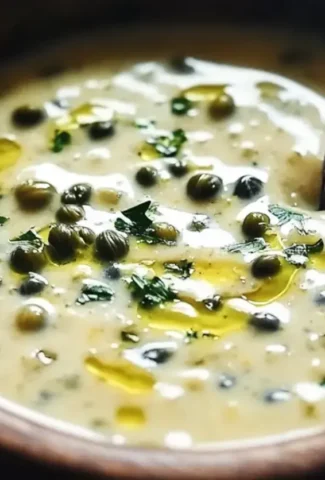
Imagine the aroma: butter sizzling in a hot skillet, garlic releasing its sweet perfume, and then the sharp, clean zest of lemon cutting through the richness. The capers add little bursts of brine, like tiny flavor grenades that wake up every bite. The sauce is glossy, a pale golden hue flecked with green parsley, and it clings beautifully to whatever you drizzle it over — a perfectly seared salmon fillet, a juicy chicken breast, or even a simple bowl of angel hair pasta. It’s the kind of sauce that makes you close your eyes and sigh with satisfaction after the first forkful.
What makes my version different is the technique: I start with a mix of butter and olive oil, which gives the sauce a richer, more stable emulsion than using butter alone. This is a trick I learned from chef Laurent, my mentor at Le Cordon Bleu, who always said, “Butter for flavor, oil for stability.” I also add a splash of dry white wine (or broth) and let it reduce slightly before adding the lemon — this deepens the flavor and removes any harshness. One common mistake home cooks make is adding the lemon juice too early or cooking it too long, which makes it bitter. My pro tip: always add fresh lemon juice at the very end, right off the heat, to preserve its bright, zesty character.
Why This Simple Lemon Caper Sauce Recipe Is the Best
The Flavor Secret: The combination of unsalted butter and quality olive oil creates a luscious base that carries the lemon and capers beautifully. A touch of lemon zest — not just juice — adds an aromatic brightness that elevates the entire dish. It’s a simple culinary trick that I learned in Paris, and it makes a world of difference.
Perfected Texture: Unlike many quick sauces that break or separate, this one stays velvety smooth. The key is to keep the heat moderate — never let the butter brown, and whisk continuously when adding the wine. This emulsification technique ensures a sauce that clings to every bite, not a thin, watery mess.
Foolproof & Fast: With just 10 minutes and a handful of ingredients, anyone can make this sauce successfully on the first try. There’s no complicated reduction, no egg yolks to temper — just simple, honest cooking. I’ve taught this in my NYC cooking classes to absolute beginners, and every single person left feeling like a chef.
Lemon Caper Sauce Ingredients
Every time I walk through the Union Square Greenmarket and pick up a bunch of fresh parsley or a perfect lemon, I think of my mother’s spice-scented kitchen in Marrakech. She taught me that the best cooking starts with the freshest ingredients — and this simple sauce is no exception. Here’s what you’ll need:
Ingredients List
- 2 tablespoons unsalted butter
- 2 tablespoons olive oil
- 2 garlic cloves, minced
- 1/4 cup dry white wine or chicken broth
- 2 tablespoons fresh lemon juice (about 1/2 a lemon)
- 2 tablespoons capers, rinsed and drained
- 1 teaspoon lemon zest
- Salt and black pepper, to taste
- 1 tablespoon fresh parsley, chopped (optional, for garnish)
Ingredient Spotlight
Unsalted Butter: I always use unsalted butter so I can control the salt level — especially important because capers are briny. Look for a European-style butter like Plugrà for extra richness. Substitute: ghee for a dairy-free version (though the sauce will be slightly nuttier).
Capers: These are the star of the show. I prefer salt-packed capers (found in specialty stores) over brine-packed ones because their flavor is more concentrated and less acidic. If using brine-packed, be sure to rinse them well. Substitute: chopped green olives for a milder brininess, or chopped cornichons for a different tang.
Fresh Lemon: Never use bottled lemon juice — it has a flat, metallic taste. A fresh lemon gives you that bright, floral acidity that makes this sauce sing. Look for lemons that are heavy for their size and have a slight give when squeezed. Substitute: a splash of white wine vinegar and a pinch of lemon zest from a preserved lemon for a more Moroccan twist.
| Original Ingredient | Best Substitution | Flavor / Texture Impact |
|---|---|---|
| Unsalted Butter | Ghee (clarified butter) | Dairy-free; slightly nuttier, higher smoke point |
| Capers | Chopped green olives | Milder brine, softer texture |
| Fresh Lemon Juice | White wine vinegar + preserved lemon zest | More complex, slightly floral acidity |
| Dry White Wine | Chicken or vegetable broth | Less acidic, savory depth, non-alcoholic |
| Fresh Parsley | Fresh cilantro or chives | Herbaceous twist; cilantro for a more North African feel |
How to Make Simple Lemon Caper Sauce — Step-by-Step
Trust me, you’ve got this. It’s one of those recipes that feels almost magical in its simplicity — and the aroma will fill your kitchen with pure comfort.
Step 1: Melt the Butter and Oil
Place a medium skillet over medium heat. Add the butter and olive oil and let them warm together, swirling the pan occasionally, until the butter melts and begins to bubble gently. Do not let the butter brown — you want a pale, creamy foam. This should take about 1 minute.
💡 Samantha’s Pro Tip: Use a light-colored skillet so you can monitor the color of the butter. Once it starts to turn golden, it’s already browning!
Step 2: Sauté the Garlic
Add the minced garlic to the bubbling butter-oil mixture. Sauté for 12 minutes, stirring constantly, until the garlic becomes fragrant. You should smell it, but it should not turn brown — burnt garlic will make your sauce bitter.
⚠️ Common Mistake to Avoid: Garlic cooks very quickly. If you step away or use high heat, it will burn in seconds. Stay by the stove and stir!
Step 3: Add the Wine or Broth
Pour in the dry white wine or chicken broth. Stir well to combine, then let the liquid simmer for 23 minutes. This allows the alcohol to cook off (if using wine) or the broth to reduce slightly, concentrating its flavor. The mixture should reduce by about half.
💡 Samantha’s Pro Tip: For a non-alcoholic version, chicken broth works beautifully. For an even richer flavor, use fish stock — it’s my secret for seafood dishes!
Step 4: Add Lemon, Capers, and Season
Stir in the lemon juice, capers, and lemon zest. Season with a pinch of salt and a few cracks of black pepper to taste. Let it cook for another 12 minutes, just to warm everything through and meld the flavors. Taste it now — it should be bright, briny, and buttery.
⚠️ Common Mistake to Avoid: Be careful with salt! Capers are naturally salty, so always taste before adding any extra salt. I usually add just a tiny pinch at this stage.
Step 5: Finish and Serve
Remove the pan from the heat. Stir in the chopped fresh parsley, if you’re using it. The residual heat will wilt the parsley slightly without cooking it to death. Drizzle the warm sauce over your desired dish immediately — it’s best fresh!
💡 Samantha’s Pro Tip: If the sauce starts to separate or looks greasy, whisk in a teaspoon of cold water or a small ice cube. This will re-emulsify the butter and bring it back to a silky consistency.
| Step | Action | Duration | Key Visual Cue |
|---|---|---|---|
| 1 | Melt butter & oil | 1 minute | Butter melts and foams gently, no browning |
| 2 | Sauté garlic | 12 minutes | Garlic is fragrant but not colored |
| 3 | Add wine/broth & simmer | 23 minutes | Liquid reduces by about half |
| 4 | Add lemon, capers, season | 12 minutes | Sauce is glossy and aromatic |
| 5 | Add parsley, serve | Instant | Parsley is bright green, sauce is warm |
Serving & Presentation
This sauce is incredibly versatile, and I love serving it in ways that highlight its bright, briny character. For a weeknight dinner in my NYC apartment, I’ll pan-sear a fillet of salmon until the skin is shatteringly crisp, then drizzle this sauce right over the top, letting it pool on the plate. A sprinkle of fresh parsley and a few extra capers make it look restaurant-worthy. On Sundays, I often make a big bowl of linguine and toss it with this sauce, a handful of cherry tomatoes, and some toasted breadcrumbs — it’s a 15-minute meal that feels like a hug.
The presentation is minimal but intentional: the glossy sauce should be the star. I always spoon it over the main ingredient just before serving, not before, so it doesn’t get absorbed or lose its sheen. A final grating of lemon zest over the top adds a pop of color and an extra layer of citrus fragrance — a trick I picked up from a pastry chef in Paris who used it on everything from tarts to fish.
| Pairing Type | Suggestions | Why It Works |
|---|---|---|
| Side Dish | Roasted asparagus, sautéed spinach, or a simple arugula salad | The lemon and capers cut through the bitterness of greens |
| Sauce / Dip | Drizzled over grilled shrimp, roasted chicken thighs, or crispy tofu | The buttery emulsion clings to proteins beautifully |
| Beverage | A crisp Sauvignon Blanc or a dry Pinot Grigio | High acidity complements the lemon and capers |
| Garnish | Extra lemon zest, more fresh parsley, or a sprinkle of red pepper flakes | Adds color, texture, and a hint of heat |
Make-Ahead, Storage & Reheating
Living in NYC means my schedule is always packed — between running cooking classes, testing recipes, and exploring new restaurants, I need meals that are both delicious and practical. This sauce is a lifesaver because it can be made ahead in batches and stored for quick weeknight dinners. Here’s how I manage it:
| Method | Container | Duration | Reheating Tip |
|---|---|---|---|
| Refrigerator | Airtight glass jar or container | Up to 5 days | Reheat gently in a skillet over low heat, whisking in a splash of water or broth |
Reader Interactions |
Leave a Reply