Table of Contents
Vegan Cabbage Rolls with Chinese Brown Garlic Sauce – A Flavor-Packed, Gluten-Free Feast
Growing up in Morocco, my mother’s kitchen was filled with the scent of stuffed vegetables—bell peppers, zucchini, and of course, cabbage leaves simmering in a rich, spiced tomato sauce. It was a lesson in patience and flavor layering. Years later, in my NYC kitchen, I wanted to create a vegan cabbage rolls recipe that honored that tradition of comfort but with a vibrant, Asian-inspired twist. The result is these tender rolls, packed with a savory rice and veggie filling and absolutely drenched in a glossy, umami-rich Chinese brown garlic sauce. This dish is naturally gluten-free, vegan, and brings together the best of home-cooked comfort with bold, restaurant-worthy flavors.
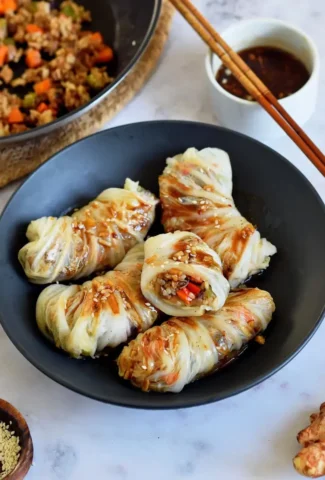
Imagine biting into a soft, slightly sweet napa cabbage leaf that gives way to a warm, sticky filling of sushi rice, sautéed mushrooms, carrots, and peppers, all seasoned with ginger, garlic, and tamari. The magic, however, is in the sauce—a glossy, savory-sweet glaze that clings to every roll, with notes of caramelized garlic, a hint of maple, and a subtle kick from red pepper flakes. The texture contrast is everything: the tender cabbage, the slightly chewy rice, the crisp-tender veggies inside, and that luxurious, velvety sauce coating it all. It’s a symphony of flavors that feels both familiar and excitingly new.
My version is a product of my culinary journey: the careful stuffing technique from my mother, the precision in sauce-making from my French training, and the love for big, bold flavors I’ve embraced living in New York. I’ve streamlined the process to make it achievable for a weeknight, but I’m sharing all my chef’s secrets to ensure success. For instance, the key to perfect, pliable cabbage leaves without tearing is a quick blanch in boiling water, followed by an immediate ice bath—a technique I perfected in Paris. A common mistake to avoid is overfilling the leaves, which can cause them to burst during rolling. Stick with me, and you’ll have a stunning, delicious centerpiece for any table.
Why This Vegan Cabbage Rolls Recipe Is the Best
The secret weapon here is the Chinese brown garlic sauce. Unlike many recipes that use a simple tomato-based sauce, this glossy, umami-packed glaze is what elevates these rolls from simple to spectacular. It’s a technique I honed working in Parisian kitchens, where balancing sweet, salty, sour, and savory is paramount. The combination of tamari, rice vinegar, and a touch of maple syrup creates a complex depth that makes each bite irresistible.
Texture is king in any stuffed dish, and we achieve perfection here through two methods. First, using short-grain sushi rice, which becomes wonderfully sticky and chewy when cooked, ensuring the filling holds together beautifully. Second, the quick pan-sear after rolling gives the cabbage a delightful golden-brown exterior with a slight caramelized flavor, adding a wonderful contrast to the soft interior. It’s a chef’s trick for adding restaurant-quality finish to a home-cooked meal.
Despite its impressive appearance, this recipe is designed to be foolproof. I’ve broken down the steps so you can prep components simultaneously—cooking the rice while blanching the cabbage and sautéing the veggies. The filling is forgiving, and the sauce comes together in one pan in just minutes. Whether you’re new to vegan cooking or a seasoned pro, my clear instructions and pro tips will guide you to a flawless result every time.
Vegan Cabbage Rolls Ingredients
I love how this recipe lets me shop my local NYC greenmarket for the freshest peppers and carrots, while the core Asian pantry staples are always on hand in my kitchen. It reminds me of the fusion cooking I fell in love with—taking the best local produce and combining it with globally-inspired flavors. Let’s gather everything we need.
Ingredients List
- 1 1/4 cups dry sushi rice (or any short-grain rice)
- 1 large napa cabbage (10-12 leaves)
- 1 tbsp neutral oil, divided (like avocado or grapeseed)
- 1 medium onion, diced
- 3/4 tbsp fresh ginger, minced
- 3 garlic cloves, minced
- 1 medium carrot, diced
- 2 medium bell peppers (any color), diced
- 8 white button mushrooms, diced (fresh or canned, drained)
- 2 tbsp tamari or coconut aminos
- 1/2 tsp each of sea salt, ground black pepper, onion powder
- 1/4 tsp red pepper flakes, or to taste
- Sesame seeds, for garnish
For the Chinese Brown Garlic Sauce:
- 1 tsp sesame oil (or neutral oil)
- 1/2 tbsp fresh ginger, minced
- 2 garlic cloves, minced
- 1 1/2 tbsp tamari or coconut aminos
- 1 tbsp rice vinegar
- 3/4 tbsp pure maple syrup
- 1/2 cup water
- 1/2 tbsp cornstarch
- Salt, black pepper, red pepper flakes, and a pinch of smoked paprika, to taste
Ingredient Spotlight
Napa Cabbage: This is the foundation. Its long, tender leaves and mild, slightly sweet flavor are perfect for wrapping. Look for a head that feels heavy for its size with crisp, bright green outer leaves. Avoid any with significant browning. If you can’t find napa, savoy cabbage is the best substitute—its crinkled leaves are also pliable, though slightly more robust in flavor.
Sushi Rice: The starch in short-grain rice is essential for a cohesive, slightly sticky filling that holds its shape inside the roll. In the US, look for “Calrose” or any brand labeled “sushi rice” in the Asian aisle. If you must substitute, medium-grain rice like Arborio will work, but avoid long-grain varieties like basmati or jasmine, as they remain too separate and dry.
Tamari: This is my go-to for a rich, gluten-free umami base. It’s slightly thicker and less salty than most soy sauces. You’ll find it next to the soy sauce. Coconut aminos are a great paleo-friendly alternative with a sweeter, milder taste. If using regular soy sauce, reduce the amount slightly and taste as you go to avoid over-salting.
| Original Ingredient | Best Substitution | Flavor / Texture Impact |
|---|---|---|
| Napa Cabbage | Savoy Cabbage | Slightly earthier flavor, leaves are more textured but still roll well. |
| Sushi Rice | Arborio Rice | Will be creamier and slightly less sticky, but still holds together. |
| Tamari | Coconut Aminos | Sweeter, fruitier note with less saltiness; sauce will be lighter in color. |
| Fresh Button Mushrooms | Canned Mushrooms or Shredded Jackfruit | Canned offer convenience but softer texture; jackfruit adds a meaty, shreddable element. |
| Maple Syrup | Agave Nectar or Brown Sugar | Similar sweetness; agave is neutral, brown sugar adds a deeper molasses note. |
How to Make Vegan Cabbage Rolls — Step-by-Step
Don’t let the rolling intimidate you! I’ve structured these steps so you can work efficiently, and the process is actually quite meditative. Think of it as assembling little flavor parcels of joy.
Step 1: Prep the Rice and Cabbage
Start by soaking the sushi rice in a large bowl of cool water for 45-60 minutes. This step is crucial—it helps the grains cook evenly and become perfectly tender. Drain the rice well, then cook it in a saucepan with 1 1/2 cups of water and a pinch of salt. Bring to a boil, reduce to a simmer, cover, and cook for 10-12 minutes until the water is absorbed and the rice is tender. Fluff with a fork and set aside.
💡 Samantha’s Pro Tip: Soaking the rice isn’t just for texture; it also reduces the cooking time significantly, preventing the outside from becoming mushy before the inside is done. It’s a technique I learned for perfect sushi rice and it works wonders here.
Step 2: Blanch the Cabbage Leaves
While the rice soaks/cooks, carefully separate 10-12 large, whole leaves from the napa cabbage. Bring a large pot of water to a rolling boil. Using tongs, submerge 3-4 leaves at a time and cook for 2-3 minutes, just until they turn bright green and are pliable. Immediately transfer them to a large bowl filled with ice water to stop the cooking. This sets the color and makes them easy to handle. Pat the leaves dry with a clean kitchen towel.
⚠️ Common Mistake to Avoid: Overcooking the leaves. If they boil for too long, they become too fragile and will tear when you try to roll them. 2-3 minutes is perfect—they should be soft but still have some structural integrity.
Step 3: Sauté the Veggie Filling
Heat 1/2 tablespoon of oil in a large skillet or wok over medium-high heat. Add the diced onion, ginger, and garlic, and sauté for 1 minute until fragrant. Add the diced carrot, peppers, and mushrooms. Cook, stirring frequently, for 3-4 minutes until the vegetables are just tender-crisp. Add the 2 tablespoons of tamari, salt, pepper, onion powder, and red pepper flakes. Stir to coat and cook for another 1-2 minutes.
Step 4: Combine Filling and Roll
Add the cooked sushi rice to the skillet with the sautéed vegetables. Gently fold everything together until well combined. Turn off the heat and taste the mixture. Adjust seasoning with more tamari or spices if needed. To roll, place one cabbage leaf on a clean surface with the stem end facing you. Place about 1 1/2 to 2 tablespoons of filling in the center of the lower third of the leaf. Fold the sides inward over the filling, then roll up tightly from the bottom to the top, like a burrito. Place seam-side down on a plate. Repeat with remaining leaves and filling.
💡 Samantha’s Pro Tip: Don’t overfill! It’s tempting to pack more in, but a modest amount ensures a tight, secure roll that won’t burst open during the final sear. If you have leftover filling, it’s delicious served on its own or as a rice bowl topping.
Step 5: Pan Sear the Rolls
Heat the remaining 1/2 tablespoon of oil in a large non-stick skillet over medium heat. Once hot, carefully place 5-6 rolls in the pan, seam-side down. Cook for 2-3 minutes per side, or until they develop a beautiful golden-brown crust. Work in batches if needed, adding a tiny bit more oil for the second batch. Transfer the seared rolls to your serving platter.
Step 6: Make the Garlic Sauce
In a small saucepan, heat 1 teaspoon of sesame oil over medium heat. Add the minced ginger and garlic and sauté for 30 seconds until fragrant but not browned. Pour in the tamari, rice vinegar, and maple syrup, stirring to combine. Let it simmer for 1-2 minutes. In a separate small bowl, whisk the water and cornstarch into a smooth slurry. While stirring the sauce constantly, slowly pour in the cornstarch slurry. Add a pinch of salt, pepper, red pepper flakes, and smoked paprika. Continue to cook, stirring, for 2-3 more minutes until the sauce thickens to a glossy, gravy-like consistency.
⚠️ Common Mistake to Avoid: Adding the cornstarch slurry directly to the hot sauce without whisking first. This will cause instant lumps. Always make a slurry with cool water first, then incorporate it gradually while stirring.
Step 7: Serve and Enjoy
Pour the warm Chinese brown garlic sauce over the pan-seared cabbage rolls. Garnish generously with sesame seeds. Serve immediately while everything is warm and the sauce is luxuriously glossy.
| Step | Action | Duration | Key Visual Cue |
|---|---|---|---|
| 1 | Soak & Cook Rice | ~60 mins (incl. soak) | Rice is tender, water fully absorbed. |
| 2 | Blanch Cabbage | 2-3 min per batch | Leaves turn bright green and are pliable. |
| 3 & 4 | Sauté Filling & Roll | 8-10 mins | Veggies tender-crisp; rolls are tight and secure. |
| 5 | Pan Sear Rolls | 4-6 mins per batch | Golden-brown crust on both sides. |
| 6 | Make Sauce | 5-7 mins | Sauce is glossy and coats the back of a spoon. |
Serving & Presentation
Presentation is where you can really let your inner artist shine. I love to arrange the rolls slightly overlapping on a large, shallow platter—it reminds me of the beautiful, communal dishes served in Morocco. Drizzle that gorgeous brown garlic sauce generously over the top, letting it pool around the rolls. A heavy-handed sprinkle of white and black sesame seeds adds visual pop and a nutty crunch. For a fresh, colorful touch, scatter some thinly sliced scallions or microgreens on top.
In my NYC home, this is often the star of a relaxed weekend dinner with friends. To round out the meal, I think about contrasts in texture and temperature. Since the rolls are warm, savory, and saucy, I like to pair them with something cool and crisp. It creates a beautiful, balanced plate that feels both satisfying and light.
| Pairing Type | Suggestions | Why It Works |
|---|---|---|
| Side Dish | Simple cucumber salad, steamed edamame, or stir-fried bok choy. | Adds a fresh, crunchy, or green element that cuts through the richness of the sauce. |
| Sauce / Dip | Extra garlic sauce on the side, sriracha mayo, or a sweet chili dip. | Allows guests to customize heat and flavor, adding another layer of fun. |
| Beverage | Iced green tea, a crisp lager, or a dry Riesling. | The clean, slightly bitter or acidic notes cleanse the palate between bites. |
| Garnish | Sesame seeds, sliced scallions, chopped cilantro, or toasted nori strips. | Adds final texture, color, and bursts of fresh herbal or toasty flavor. |
Make-Ahead, Storage & Reheating
As a busy New Yorker, I’m a huge fan of meal prep, and these vegan cabbage rolls are fantastic for it. You can easily break the process into stages. I often blanch the cabbage leaves and cook the rice filling a day ahead, storing them separately in the fridge. Then, all I have to do on a busy weeknight is roll, sear, and whip up the quick sauce. It turns an impressive dish into a practical, stress-free dinner.
| Method | Container | Duration | Reheating Tip |
|---|---|---|---|
Reader Interactions |
Leave a Reply