Table of Contents
Szechuan Sauce Recipe: Blending Moroccan Heat and Parisian Finesse
Growing up in my mother’s kitchen in Morocco, I learned that heat is not just about burning your tongue—it’s about layering aromatics like fresh ginger and chili to build a slow, warming depth. Later, at culinary school in Paris, I mastered the art of balanced sauces with French precision. This Szechuan sauce recipe blends those two worlds: the bold, sweet-and-savory snap of Szechuan heat with the silky finish of a classic French liaison.
The beauty of this sauce is in its complexity—the soy sauce and brown sugar create a deep, caramelized sweetness, while the chili garlic sauce and red pepper flakes deliver a tingle that starts on your tongue and lingers warmly in your throat. The red wine vinegar and rice vinegar add a bright acidity that cuts through the richness, giving the sauce a glossy, restaurant-quality sheen. Each spoonful is balanced: sweet, savory, spicy, and tangy all at once.
In my NYC kitchen, I make this sauce in just 15 minutes for a flavor that tastes like it simmered for hours. Most Szechuan sauce recipes are either too sweet or too harsh with chili—I’ve adjusted the ratios using my Paris-trained palate to achieve that restaurant-perfect balance. My favorite trick? Always bloom the ginger in the hot broth before adding the rest—it releases the essential oils. And my biggest caution: don’t walk away from the cornstarch slurry; a minute too long and you’ll have paste instead of a velvety sauce.
Why This Szechuan Sauce Recipe Is the Best
The Flavor Secret: My culinary school palate taught me that balance is everything. Here, the brown sugar is not cloying—it’s tempered by the red wine vinegar and rice vinegar, creating a sweet-and-savory base that’s lifted by the chili garlic sauce. Growing up in Morocco, my mother always used fresh ginger in her tagines for brightness; I use it here to echo that same aromomatic lift.
Perfected Texture: The cornstarch slurry is the Parisian technique I use to achieve a glossy, velvety consistency that clings perfectly to noodles or stir-fried vegetables. Instead of guessing, I rely on a visual cue: the sauce should coat the back of a spoon and then slowly fall off in a steady ribbon—no lumps, no thin watery pools.
Foolproof & Fast: With just one saucepan and 15 minutes, even a busy New Yorker can whip this up. It’s forgiving—if it thickens too much, a splash of chicken broth or water brings it back. And it’s versatile: you can dial up the heat with extra chili garlic sauce or go mild by reducing the red pepper flakes. No specialist equipment needed, which is why I’ve made it over 50 times since perfecting it for my blog.
Szechuan Sauce Ingredients
I source my soy sauce from the Sunrise Mart in the East Village, and the fresh ginger from the organic aisle at the Union Square Greenmarket. My mother would laugh at me buying ginger instead of growing it, but she’d approve of how I use it here. Each ingredient is chosen to create that perfect Szechuan balance—I avoid too much sugar or too much vinegar, which are common pitfalls in store-bought versions.
Ingredients List
- 1/4 cup low-sodium soy sauce
- 2 tablespoons red wine vinegar
- 1 tablespoon fresh ginger (minced)
- 2 tablespoons brown sugar
- 1 tablespoon Asian chili garlic sauce (or chili sauce)
- 1 tablespoon rice vinegar
- 1/2 teaspoon crushed red pepper flakes
- 1/2 teaspoon garlic powder
- 1/2 cup chicken broth (veggie broth for vegetarian)
- 1 tablespoon cornstarch
Ingredient Spotlight
Low-Sodium Soy Sauce: This is the structural backbone of the sauce, providing deep umami without overwhelming saltiness. Using low-sodium gives you control—I can adjust seasoning later without making the sauce unpalatably salty. Never substitute regular soy sauce unless you reduce the amount; the sodium difference is dramatic.
Fresh Ginger (minced): This is non-negotiable in my kitchen. The zesty, almost citrusy warmth of fresh ginger is what makes this sauce Szechuan—not just hot, but complex. Dried ginger will not give you the same floral heat; if you have no ginger root, use 1 teaspoon of ginger paste from a tube, found in most US grocery produce sections.
Asian Chili Garlic Sauce: This is my shortcut to Szechuan flavor depth. It contains crushed chilies mixed with garlic and a touch of vinegar, offering both heat and body. Brands like Huy Fong or Lee Kum Kee are easy to find in large supermarkets. If you can’t find it, substitute 1 teaspoon of Sriracha plus 1/2 teaspoon of minced garlic—though you’ll lose some chunkiness.
| Original Ingredient | Best Substitution | Flavor / Texture Impact |
|---|---|---|
| Low-sodium soy sauce | Coconut aminos | Slightly sweeter, less salty, but still umami-rich |
| Fresh ginger (minced) | 1 tsp ginger paste (tube) | Similar heat, but less bright texture |
| Asian chili garlic sauce | 1 tsp Sriracha + 1/2 tsp minced garlic | Less chunky, but similar heat and garlic flavor |
| Red wine vinegar | Apple cider vinegar | Slightly fruitier, but still acidic and balanced |
How to Make Szechuan Sauce — Step-by-Step
I promise, this is the easiest 15-minute sauce you’ll ever make. The key is to have everything measured before you turn on the stove—mise en place, as we say in Paris. Here’s how I make it in my own kitchen.
Step 1: Prepare the Slurry
In a small bowl, combine 1/2 cup of chicken broth (or vegetable broth for vegetarian) with 1 tablespoon of cornstarch. Whisk until the cornstarch is fully dissolved—no lumps remain, and the mixture looks like milky water. Set aside near the stove.
💡 Samantha’s Pro Tip: Whisk the slurry one more time just before adding it to the saucepan—cornstarch settles fast. A second whisk ensures a perfectly smooth sauce without any starchy lumps.
Step 2: Simmer the Base
Place a medium saucepan over medium heat. Add the low-sodium soy sauce, red wine vinegar, rice vinegar, brown sugar, Asian chili garlic sauce, crushed red pepper flakes, garlic powder, and the minced fresh ginger. Stir everything together and bring it to a light boil—small bubbles should appear around the edges of the pan, not a rolling boil. This should only take 2-3 minutes.
⚠️ Common Mistake to Avoid: Don’t let it come to a full rolling boil before adding the slurry. A light boil ensures the sugar and chili flavors meld without burning the ginger. If it’s bubbling aggressively, it’s too hot—pull it back to low heat for a moment.
Step 3: Thicken and Finish
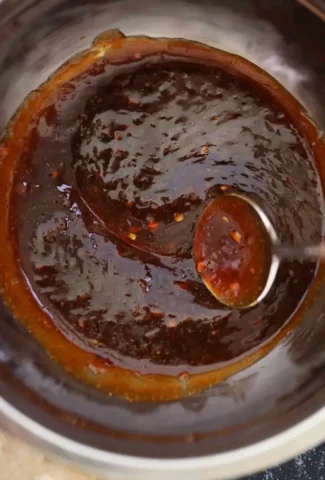
Give the cornstarch slurry another quick whisk, then pour it into the saucepan while stirring constantly with a whisk or wooden spoon. Continue stirring for 3-5 minutes—the sauce will bubble and thicken. You’ll see it transform from a thin liquid into a glossy, syrupy sauce that clings to the back of your spoon. When it’s ready, remove the saucepan from the heat and let it cool for 2-3 minutes. The sauce will continue to thicken slightly as it cools.
💡 Samantha’s Pro Tip: For a restaurant-style shine, add a teaspoon of sesame oil after removing the sauce from the heat. It adds a nutty aroma and gives the sauce a mirror-like gloss.
| Step | Action | Duration | Key Visual Cue |
|---|---|---|---|
| 1 | Prepare slurry | 1 min | No lumps, milky appearance |
| 2 | Simmer base | 2-3 mins | Small bubbles around edges |
| 3 | Thicken sauce | 3-5 mins | Glossy, coats the back of a spoon |
Serving & Presentation
In my NYC kitchen, this Szechuan sauce is my weeknight superhero. I love serving it over steamed jasmine rice with a fried egg on top—the warm yolk mingling with the sweet-spicy sauce is pure comfort. For noodles, toss it with thick lo mein or ramen noodles, and add sautéed broccoli, mushrooms, and sesame seeds for crunch.
When I use it as a dip, I serve it in small bowls alongside steamed dumplings or crispy spring rolls. Fresh garnishes make all the difference: sliced scallions, a sprinkle of white sesame seeds, even a few fresh cilantro leaves. My mother used to add a few drops of lemon juice to her sauces; I sometimes do the same here for an extra brightness.
| Pairing Type | Suggestions | Why It Works |
|---|---|---|
| Side Dish | Steamed bok choy, sautéed kale, roasted tofu | Blanched greens absorb the sauce without overpowering it |
| Sauce / Dip | Dumplings, spring rolls, potstickers, tempura | Sweet-and-savory complements fried or steamed wrappers |
| Beverage | Iced green tea, light lager beer, cucumber soda | Clean, crisp drinks balance the heat and acidity |
| Garnish | Sliced scallions, toasted sesame seeds, fresh cilantro | Adds color, freshness, and nutty flavor |
Make-Ahead, Storage & Reheating
On a busy Sunday, I often double this sauce recipe and store it for the week. My meal-prep trick: I pour the cooled sauce into a mason jar and use it as needed for stir-fries, marinades, or drizzling over roasted vegetables after a long workday. The sauce holds beautifully in the fridge, and the flavors only deepen overnight.
| Method | Container | Duration | Reheating Tip |
|---|---|---|---|
| Refrigerator | Airtight glass jar | Up to 5 days | Reheat gently in a saucepan over low heat, adding 1-2 tablespoons of water or broth to thin it out |
| Freezer | Freezer-safe zip-top bag or container | Up to 3 months | Thaw overnight in the refrigerator, then reheat over medium heat, stirring occasionally |
| Make-Ahead | Mason jar with lid | Up to 3 days in advance | No need to reheat if using as a cold dip—just shake before serving |
When reheating, I always stir a little of the original broth or water into the sauce to revive its silky texture. If it’s been frozen, it might separate slightly—that’s fine. Just whisk it back together over medium heat for 2 minutes. Never microwave it for more than 30 seconds at a time, as high heat can cause the cornstarch to break down and turn the sauce grainy.
Variations & Easy Swaps
| Variation | Key Change | Best ForSzechuan Sauce This Szechuan sauce is a flavorful sweet and savory recipe with just the right amount of spice. I make it in 15 minutes using soy sauce, fresh ginger, and chili garlic sauce. It works perfectly as a dip, marinade, or sauce for rice, noodles, and stir-fried meals. Ingredients
Scale
Instructions
Reader Interactions |
|---|
Leave a Reply