Table of Contents
Sour Cream Coffee Cake Loaf with Cinnamon Crumb Topping – The Moistest, Most Foolproof Loaf
Growing up in Morocco, my mother’s kitchen was a symphony of cinnamon—from tagines to sweet pastries—so when I moved to New York City and trained at Le Cordon Bleu in Paris, I knew I had to bring that warmth into my baking. This sour cream coffee cake loaf is my love letter to those mornings: soft, tender, and crowned with a buttery cinnamon crumb topping that shatters with every bite. The sour cream coffee cake loaf is the kind of recipe that feels like a hug, and it’s become a staple in my NYC apartment for weekend brunches and quiet afternoons.
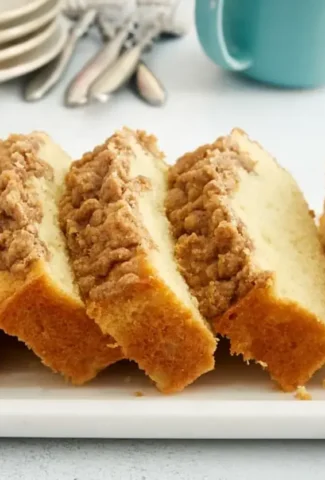
What makes this loaf truly special is the balance of tangy sour cream and sweet cinnamon—a combination I perfected during my pastry days in Paris. The crumb topping, with its crunchy, buttery clusters, contrasts beautifully with the moist, almost velvety crumb underneath. When you slice into it, the aroma of cinnamon and vanilla fills your kitchen, and the golden-brown top promises a treat that’s both rustic and refined. It’s the kind of loaf that disappears before you’ve had your coffee, and I wouldn’t have it any other way.
I’ve tested this sour cream coffee cake loaf more times than I can count—using shortcuts from my Parisian training and a trick I picked up at a Union Square farmers market for the fluffiest texture. 💡 Samantha’s Pro Tip: Creaming the butter and sugar until truly light and fluffy is non-negotiable; it’s the difference between a dense cake and one that melts in your mouth. And here’s a common mistake to avoid: don’t overmix the batter once you add the flour—stop as soon as it’s combined, or you’ll end up with a tough loaf. Trust me, this foolproof method will make you feel like a pro baker.
Why This Sour Cream Coffee Cake Loaf Recipe Is the Best
The Flavor Secret: The sour cream here isn’t just for moisture—it’s a nod to the tangy yogurt-based sauces I grew up with in Morocco. Combined with a hefty dose of cinnamon from the crumb topping, this loaf has a depth that plain coffee cakes lack. My twist? I add a pinch of salt to the crumb topping, drawing on a French technique to enhance every spice. It’s a small touch, but it makes the cinnamon pop in a way that’s unforgettable.
Perfected Texture: I learned in Paris that the key to a tender crumb is the creaming method—beating butter and sugar until it’s pale and airy. Then, alternating wet and dry ingredients ensures the gluten develops just enough for structure without toughness. The sour cream keeps it incredibly moist for days, so you can bake this loaf on a Sunday and enjoy it all week. My NYC friends often say it’s the most tender coffee cake they’ve had, and that’s because every step is intentional.
Foolproof & Fast: Even if you’re a beginner, this recipe is forgiving. The instructions are straightforward: no need for a stand mixer (hand-held works fine), and the loaf pan simplifies everything. I’ve broken down each step with visual cues—like when the batter looks like “thick, fluffy clouds”—so you’ll know exactly when to stop. Plus, the crumb topping is a one-bowl wonder that takes minutes to prepare. It’s the kind of recipe that builds confidence, whether you’re baking for a party or a cozy morning.
Sour Cream Coffee Cake Loaf Ingredients
I still remember hunting down the best sour cream at a bodega near my first NYC apartment—it was the same brand my mother would use for her Moroccan sfinge. Now, I stick with full-fat sour cream for the richest loaf, and I always grab my cinnamon from a spice shop in Chelsea Market. For the butter, I swear by European-style unsalted butter—it’s what I used in Paris and it makes a noticeable difference in the crumb.
Ingredients List
- 1/3 cup firmly packed light or dark brown sugar
- 1/2 cup all-purpose flour
- 1 teaspoon ground cinnamon
- pinch salt
- 3 tablespoons unsalted butter (melted)
- 1 1/2 cups all-purpose flour
- 3/4 teaspoon baking powder
- 1/4 teaspoon baking soda
- 1/4 teaspoon salt
- 1/2 cup unsalted butter (softened)
- 1/2 cup granulated sugar
- 2 large eggs
- 1 teaspoon vanilla extract
- 1/2 cup sour cream
Ingredient Spotlight
Sour Cream: This is the star—use full-fat for the best moisture and tang. It tenderizes the gluten, making the cake exceptionally soft. In a pinch, you can substitute with plain full-fat Greek yogurt, which will add a slightly tangier note and similar texture. Avoid low-fat versions, as they can produce a drier crumb.
Butter: I use unsalted butter to control the salt level. For the creaming step, make sure it’s softened but not melted—press your finger into it; it should leave an indent without sliding. If you’re dairy-free, try a high-fat vegan butter (like Miyoko’s), but reduce the sugar by a tablespoon since vegan butters can be sweeter.
Cinnamon: This isn’t just any cinnamon—I prefer Ceylon cinnamon for its delicate, floral sweetness, which elevates the crumb topping. For a bolder spice, use cassia cinnamon. Either way, ensure it’s fresh (less than a year old) for the strongest flavor.
| Original Ingredient | Best Substitution | Flavor / Texture Impact |
|---|---|---|
| Sour cream (1/2 cup) | Plain full-fat Greek yogurt | Slightly tangier; equally moist |
| Unsalted butter (1/2 cup) | Vegan butter (high-fat, like Miyoko’s) | Slightly richer; reduce sugar by 1 tbsp |
| All-purpose flour (1 1/2 cups) | Gluten-free 1:1 blend (with xanthan gum) | Slightly denser; use room-temp ingredients |
| Brown sugar (1/3 cup) | Coconut sugar | Less sweet; more earthy, caramel notes |
| Ground cinnamon (1 tsp) | Pumpkin pie spice (for topping) | More complex, warm spice profile |
How to Make Sour Cream Coffee Cake Loaf — Step-by-Step
Follow these steps, and you’ll have a perfect loaf every time—I’ve designed them to be foolproof, even for first-time bakers. Each step is broken down with a visual cue so you can tell exactly when you’re on track.
Step 1: Prepare the Crumb Topping
In a small bowl, stir together 1/3 cup brown sugar, 1/2 cup flour, 1 teaspoon cinnamon, and a pinch of salt. Add 3 tablespoons melted butter and stir with a fork until the mixture forms clumps. Set aside—it will look like wet sand with some larger lumps.
⚠️ Common Mistake to Avoid: Don’t over-stir the topping—it should remain crumbly, not a paste. If it’s too dry, add a teaspoon of melted butter; if too wet, add a tablespoon of flour.
Step 2: Preheat and Prep Pan
Preheat your oven to 350°F (175°C). Line a 9″ x 5″ loaf pan with parchment paper, leaving an overhang on the long sides. Lightly grease the paper with butter or cooking spray for easy release.
💡 Samantha’s Pro Tip: Use binder clips to hold the parchment in place while you fill the pan—it prevents slipping and makes cleanup a breeze.
Step 3: Mix Dry Ingredients
In a medium bowl, whisk together 1 1/2 cups flour, 3/4 teaspoon baking powder, 1/4 teaspoon baking soda, and 1/4 teaspoon salt. Set aside. Baking soda reacts with the sour cream for extra lift, so make sure it’s fresh (no clumps).
⚠️ Common Mistake to Avoid: If your baking powder or soda is expired, your loaf will be flat. Test by adding a pinch to hot water—it should fizz vigorously.
Step 4: Cream Butter and Sugar
In a large bowl, using an electric mixer on medium speed, beat 1/2 cup softened butter and 1/2 cup granulated sugar until light and fluffy—about 3 minutes. It should look pale and almost doubled in volume.
💡 Samantha’s Pro Tip: Scrape down the bowl halfway through to ensure even creaming. This is the step that guarantees a light texture, so don’t rush it.
Step 5: Add Eggs and Vanilla
Add the eggs one at a time, mixing well after each addition—about 30 seconds each. Mix in 1 teaspoon vanilla extract. The batter should look smooth and glossy.
⚠️ Common Mistake to Avoid: Adding both eggs at once can curdle the batter. For extra stability, crack each egg into a small bowl first to avoid shell bits.
Step 6: Alternate Flour and Sour Cream
Reduce mixer speed to low. Add the flour mixture in three portions, alternating with two portions of sour cream—starting and ending with flour. Mix just until combined; the batter should be thick and fluffy.
💡 Samantha’s Pro Tip: Use a rubber spatula for the final few folds—this ensures you don’t overmix. Stop when you see a few flour streaks; they’ll disappear as you fold.
Step 7: Fill Pan and Add Topping
Transfer the batter to the prepared pan, spreading it evenly. Sprinkle the crumb topping generously over the top—don’t press it in, as it should form a crunchy crust.
⚠️ Common Mistake to Avoid: If you spread the topping into the batter, it will sink and become a soggy layer. Just scatter it over the surface.
Step 8: Bake and Test
Bake for 40 to 45 minutes, until the cake is deeply browned and a toothpick inserted into the center comes out clean or with a few moist crumbs. If the topping browns too quickly, tent loosely with foil after 30 minutes.
💡 Samantha’s Pro Tip: Ovens vary—start checking at 38 minutes. The cake should pull slightly away from the sides of the pan when done.
Step 9: Cool and Release
Cool the cake in the pan on a wire rack for 15 minutes. Then use the parchment overhang to lift the loaf out. Let it cool completely on the rack—at least 1 hour—before slicing to avoid a crumbly mess.
⚠️ Common Mistake to Avoid: Slicing while warm will crumble the cake. Patience is key—cooling sets the structure.
| Step | Action | Duration | Key Visual Cue |
|---|---|---|---|
| 1 | Prepare crumb topping | 5 min | Wet sand texture with clumps |
| 2 | Preheat and prep pan | 5 min | Parchment overhangs long sides |
| 3 | Mix dry ingredients | 2 min | Uniform, lump-free powder |
| 4 | Cream butter and sugar | 3 min | Pale, fluffy, doubled volume |
| 5 | Add eggs and vanilla | 2 min | Smooth and glossy |
| 6 | Alternate flour and sour cream | 2 min | Thick, fluffy batter; few flour streaks |
| 7 | Fill pan and add topping | 2 min | Even batter layer; topping scattered |
| 8 | Bake | 40-45 min | Deeply browned; toothpick clean |
| 9 |
Reader Interactions |
Leave a Reply